Yes, for hot or mixed climates. No, for cold ones.
Single silver Low-E gives you basic insulation at the lowest cost. Double silver is the sweet spot for most projects — roughly 30% better solar control than single, at a modest premium.
Triple silver adds another step-change in performance, but it only pays for itself if your building fights cooling loads for most of the year.
What “Silver Layers” in Low-E Actually Mean
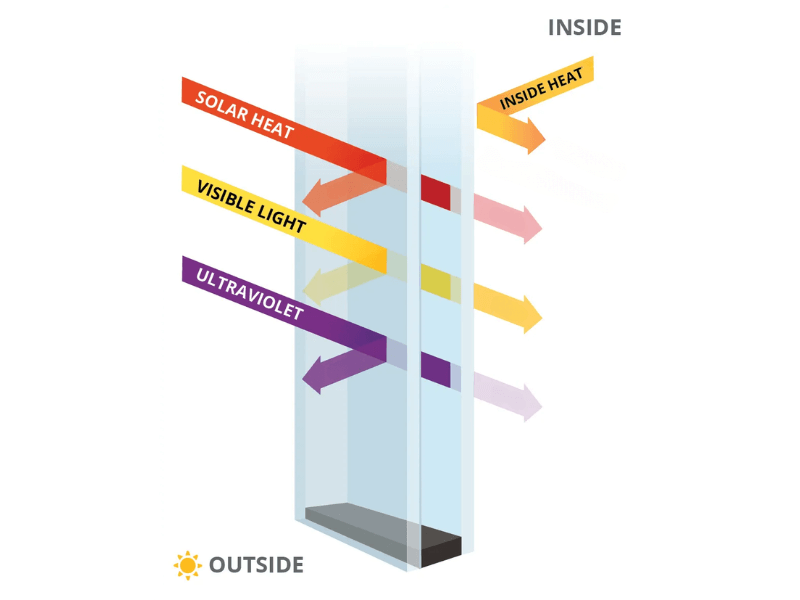
A Low-E glass coating is a microscopically thin stack of alternating silver and dielectric (ceramic) layers, deposited on the glass surface in a vacuum chamber.
Silver is the active ingredient. It reflects long-wave infrared heat. The dielectric layers do the supporting work — they protect the silver from oxidizing, neutralize reflection color, and let visible light pass through.
How the Stack Grows From One Tier to the Next
The number of silver layers defines the coating’s tier, and each added layer is another reflective boundary for heat.
| Layer (from glass outward) | Single | Double | Triple |
| Glass substrate | ✓ | ✓ | ✓ |
| Dielectric | ✓ | ✓ | ✓ |
| Silver | ✓ | ✓ | ✓ |
| Dielectric | ✓ | ✓ | ✓ |
| Silver | – | ✓ | ✓ |
| Dielectric | – | ✓ | ✓ |
| Silver | – | – | ✓ |
| Dielectric | – | – | ✓ |
| Protective overcoat | ✓ | ✓ | ✓ |
Single silver comes out to a 5-component stack around 100 nanometers thick. Double silver runs seven to 9 layers, around 200 nanometers. Triple silver stacks 12 or more layers into roughly 300 nanometers.
The thicker the stack, the more precisely the coating can block infrared without darkening the glass.
Why Silver Beats Every Other Metal Here
Silver has the highest infrared reflectivity of any affordable metal at room temperature. When heat radiation hits a thin silver film, almost all of it bounces back instead of being absorbed.
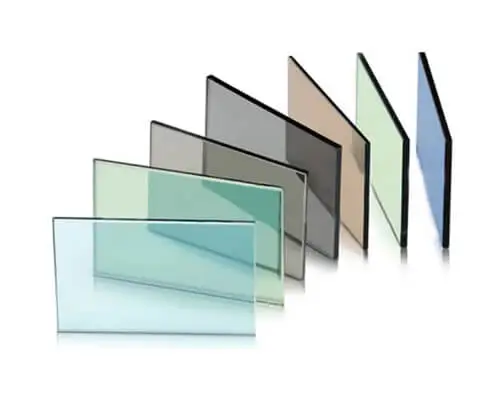
The dielectric layers — usually tin oxide, zinc oxide, or silicon nitride — are transparent to visible light but bend it just enough to cancel out unwanted color tint.
The Three Tiers at a Glance
These numbers are typical for a 6 mm Low-E pane, 12 mm argon gap, and 6 mm clear pane — a standard insulated glass unit, or IGU, tested to NFRC and ASHRAE 2010 conditions.
The 3 Numbers Worth Knowing
Three ratings drive almost every decision in this article, and each one maps to a different question you’re actually asking:
- SHGC — “How much heat gets in?” It’s the one to watch if your main worry is the air conditioning bill — it measures how much solar heat makes it through the glass, so the lower it is, the less heat you’re letting in.
- VLT — “How much daylight gets in?” It is about daylight: the higher it is, the brighter the room.
- U-factor — “How well does the glass insulate against heat transfer?” Lower U-factor means less heat escapes through the glass. The lower it is, the less heat leaks out through the glass in winter. Building in a cold climate where you want to hold winter heat in? Push U-factor down — and don’t fight a higher SHGC, since in that case solar heat is free heating, not a problem.
The tricky part is that these pull against each other. A glass that lets in plenty of daylight often lets in plenty of heat too, unless the coating is doing its job — which is exactly what the LSG ratio below is measuring. And if you’re in a cold climate trying to hold onto heat, you actually want the opposite of a hot-climate spec: push U-factor down, but don’t fight a higher SHGC, since that solar heat is free heating rather than a problem.
All three numbers show up on every data sheet in the table below. Real values vary by manufacturer and substrate, so treat this table as directional — not a figure you can hold a supplier to.
| Property | Single Silver | Double Silver | Triple Silver |
| Silver layers | 1 | 2 | 3 |
| Visible Light Transmittance (VLT) | 70–80% | 60–75% | 50–72% |
| Solar Heat Gain Coefficient (SHGC) | 0.40–0.55 | 0.25–0.40 | 0.20–0.28 |
| Shading Coefficient (SC) | 0.45–0.65 | 0.30–0.45 | 0.23–0.32 |
| U-factor (W/m²·K, NFRC winter) | 1.6–1.9 | 1.4–1.7 | 1.2–1.65 |
| Light-to-Solar-Gain (LSG = VLT/SHGC) | 1.3–1.5 | 1.6–1.9 | 1.9–2.4 |
| Coating thickness (nm) | ~100 | ~200 | ~300 |
| Infrared heat blocked (vs. clear glass) | ~30% | ~50–60% | ~70–75% |
The One Number That Matters Most
That’s LSG — Light-to-Solar-Gain. It tells you how much daylight you get for every unit of heat you let in.
Triple silver wins that ratio decisively, which is why it’s the default for premium facades chasing daylight without the heat.
Those numbers only mean something once you know what your building is actually fighting — heat or cold. That’s the question to answer next, before you go any deeper into which tier is right for you.
Climate Zone Matching — Where Each Tier Actually Wins
Your climate decides more of this than any table does. A coating that’s a smart upgrade in Dubai can be a mistake in Toronto, because in a heating-dominated climate you often want the solar gain a high-performance coating blocks.
| Köppen-Geiger zone | Typical examples | Recommended tier | Why |
| A — Tropical | Singapore, Jakarta, Manila, Mumbai | Triple silver | Year-round cooling load, intense radiation |
| B — Arid / Desert | Dubai, Riyadh, Phoenix, Cairo | Triple silver | High solar gain, large day-night temperature swing |
| C — Temperate / Mediterranean | Madrid, LA, Sydney, Cape Town, Buenos Aires | Double silver (triple on west-facing) | Mixed heating/cooling, balance wins |
| D — Cold continental | Toronto, Beijing, Berlin, Moscow, Seoul | Single or double silver (high SHGC) | Heating-dominated, want winter solar gain |
| E — Polar / Subarctic | Helsinki, Oslo, Anchorage | Single silver (high SHGC) + triple-pane | Solar gain is precious, cooling is rare |

What the Codes Reward
Energy codes generally push the same direction as the physics. Hotter zones emphasize low SHGC to control cooling load. Colder zones emphasize low U-factor to control heat loss.
ASHRAE 90.1 sets the U.S. baseline this way, and most international codes — the EU’s EPBD, China’s GB 50189, India’s ECBC, Australia’s NCC — follow the same logic even where the exact numbers differ.
The specific thresholds change with every code cycle and by climate sub-zone. Treat any number you see quoted as a starting point, and confirm the current requirement for your exact zone and building type before you lock anything in.
Now that you know roughly which tier your climate points you toward, it’s worth understanding how that coating actually gets made — because it changes what you can and can’t do with it.
Hard Coat vs. Soft Coat — Why Multi-Silver Is Always Soft Coat
Hard Coat: Tough, But Limited
Pyrolytic, or “hard coat,” Low-E is applied during float-glass production at around 700°C. It’s tough enough to be exposed to weather. But the chemistry can’t support more than one silver-equivalent layer — hard coats stay in single-silver territory for performance.
Soft Coat: Where Multi-Silver Lives
Sputtered, or “soft coat,” Low-E is applied offline in a vacuum chamber at room temperature. That’s what allows the precise multi-layer stack described earlier.
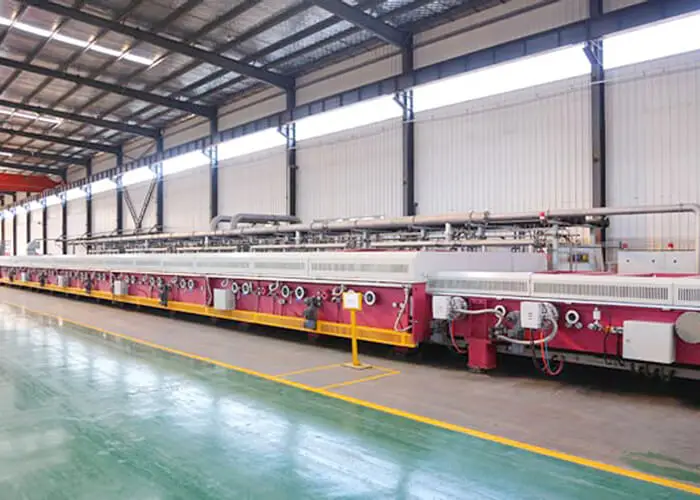
Every double- and triple-silver product on the market is soft coat. All of them are sealed inside an IGU, never exposed directly to weather.
If a supplier offers you “triple silver hard coat,” ask for the data sheet — it almost certainly isn’t triple silver.
With the manufacturing question settled, here’s what each tier actually looks like in a real project.
Single Silver Low-E — When It’s Enough
Single silver is the workhorse: one reflective layer, two protective dielectric layers, done.
Where It Wins
It’s the right call for cold-dominated climates (see the table above) where winter heat retention matters more than summer heat rejection. It also suits tight-budget residential projects, and passive-solar designs that want free winter solar gain from a high-SHGC glass.
Where It Falls Short
Anywhere the climate table points elsewhere — tropical and high-radiation zones, and large curtain walls where cumulative solar gain overwhelms the HVAC system.
If you’re building north of the 45th parallel and you’re not chasing a premium energy certification, single silver is rarely the wrong call.
Double Silver Low-E — The Modern Commercial Standard
Double silver is what most large commercial facades ship with today, and it’s the sweet spot the climate table points to for most temperate and mixed-climate projects.
Why Most Architects Stop Here
Two silver layers between dielectric layers give you a real step-change in solar control — roughly 30% lower SHGC than single silver at the same VLT — without the price of triple silver.
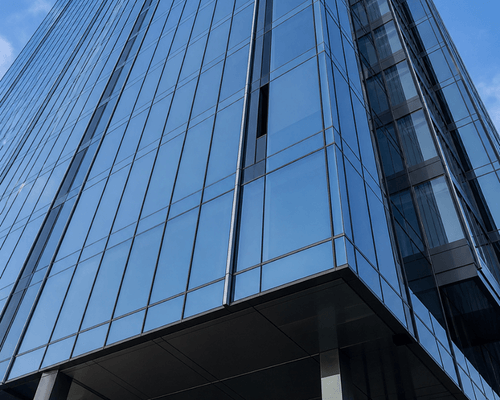
It clears ASHRAE 90.1, EN 1279, and GB 50189 requirements in most climate zones, which is why most architects stop here. The upgrade to triple silver doesn’t always justify the extra cost — but as the sections above and below show, that’s only true outside the hottest zones.
Triple Silver Low-E — When the Upgrade Pays Off
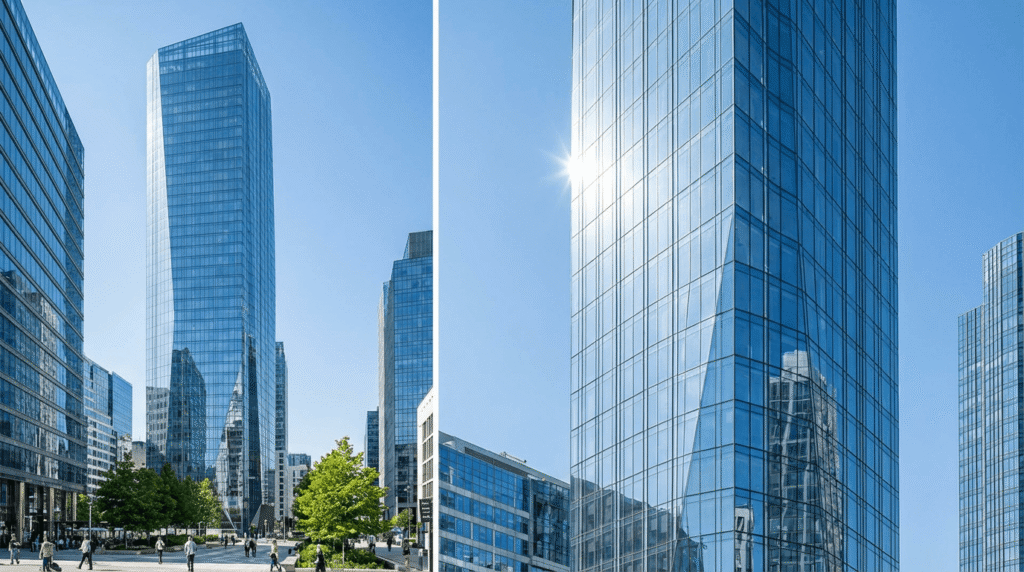
Triple silver is the flagship: three silver layers, twelve-plus total coating layers, about 300 nanometers thin. It transmits up to 70% of visible daylight while blocking up to 75% of infrared heat, pushing the LSG ratio above 2.0 — the highest you can practically get from a passive coating.
Best-in-Class SHGC Without Dark Glass
You can hit SHGC ≤ 0.25 while VLT stays around 65%. Single silver can’t get there without pairing with a dark tint, which kills daylight.
Visual Neutrality
Triple silver coatings are tuned to suppress interference colors. Double silver often shows a red or green shift at oblique angles. Triple silver holds a neutral, slightly blue-green hue that architects tend to prefer.
A Higher LSG Ratio
An LSG above 2.0 means daylight comes in much faster than heat does — which for office buildings translates directly into lower lighting and cooling loads together.
Where It Falls Short
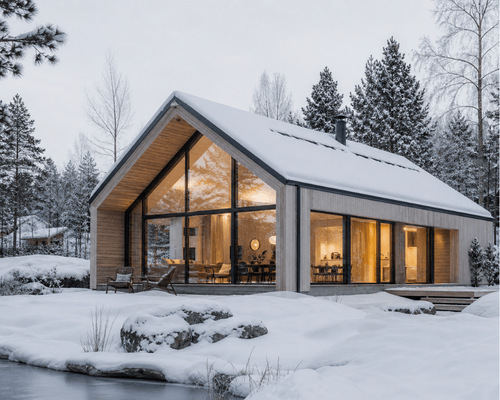
The flip side of the climate table: heating-dominated climates, where you’d be blocking the winter solar gain you actually want. Small residential windows are the other case — the absolute dollar savings rarely justify the premium there.
It’s also wasted money if the rest of the IGU — warm-edge spacer, argon fill — isn’t upgraded alongside it.
Cost vs. Benefit — The Real Math
Upfront Price Gap
Based on the pricing and project quotes we work with day to day:
| Configuration | Typical price (USD/m²) | Premium over single |
| Single silver Low-E IGU (6+12A+6) | $15–22 | — |
| Double silver Low-E IGU | $19–26 | +$3–4 |
| Triple silver Low-E IGU | $29–40 | +$10–14 over double |
For a typical residential window order, that’s roughly $30–60 extra per window to go from double to triple — about 20–35% of the total window cost as an upgrade.
What That Buys You in Cooling Load
Published research on solar-control coatings backs the general direction here, though the exact numbers depend heavily on building, orientation, and local climate.
A field study of retrofit low-E double glazing in Singapore found daily cooling-energy reductions of up to about 9%, with a 3% annual average, when applied across all sun-facing façades — and that’s from a lower-performance retrofit coating, not a purpose-built triple-silver IGU. The full study is available via ScienceDirect.
In our own project data, the gap between single and triple silver in hot, high-radiation climates tends to run several multiples higher than that, simply because triple silver blocks a larger share of infrared to begin with.
The honest way to size this for your own project is to run the numbers with your actual glazing area, local electricity price, and HVAC efficiency, rather than relying on a generic percentage — the variables move the outcome too much for one number to travel well across climates.
Payback Period
Using our typical price premiums above against the savings we see across hot, mixed, and cold-climate projects, the pattern holds consistently:
| Climate zone | Payback period |
| Hot arid | Well under a year |
| Hot humid | Under a year |
| Mixed Mediterranean | Roughly 1–1.5 years |
| Temperate | 1.5–2.5 years, sometimes longer |
| Cold | Multiple years, often never |
In hot, high-radiation climates, triple silver tends to pay for itself well within a year. In cold climates, the math usually doesn’t work — high-SHGC single silver is the better spend.
The Four Blind Spots Most Articles Don’t Tell You
Substrate Matters More Than You’d Think
Triple silver on dark body-tinted glass (Ford blue, Euro grey) wastes the coating. The substrate already absorbs visible light, so adding triple silver doesn’t help — you just lose daylight along with it.
Pair triple silver with clear or low-iron (extra-clear) glass to get the performance you’re paying for.
Triple Silver Plus Dark Tint Is a Bad Combination
This is the most common mistake we see in the field. An architect wants “solar control,” orders triple silver on a dark grey body-tinted substrate, and ends up with VLT crashing to 20–30% and an LSG ratio below 1.5.
The interior goes gloomy. Triple silver only earns its keep on low-iron or clear substrate.
Coating Position Changes Everything
The same triple silver coating performs differently depending on which glass surface it sits on inside the IGU.
Standard convention: surface #2 (outer pane, room side) handles solar control by blocking heat before it enters. Surface #3 (inner pane, room side) handles insulation by reflecting interior heat back inside.
In hot climates you want it on #2. In cold climates, #3. Mixing this up costs 10–20% of the coating’s performance for nothing.
Triple Silver Can Work Against You in Cold Climates
If your building spends most of the year heating — cold continental, subarctic — triple silver blocks the free solar gain you actually want, and you lose the winter heat you used to get for nothing.
In these climates, single silver high-SHGC glass paired with a better frame and warm-edge spacer outperforms triple silver on cost, full stop.
What We’d Put on the Order, Project by Project
We’ve supplied triple, double, and single silver across hundreds of projects, from Saudi Arabia to Sweden. Here’s what that experience boils down to.
Residential Projects
Default to double silver — it’s the best value per dollar. Upgrade to triple silver only if you have large south- or west-facing glazing in a hot or mixed climate. Stay with single silver in a cold climate where you want passive solar gain.
Commercial Curtain Wall
Choose triple silver for any project in Köppen A, B, or hot C zones — payback tends to land well under a year. Go with double silver in temperate C and cold D zones. Always pair triple silver with low-iron substrate.
Tropical or High-Radiation Markets
Triple silver plus low-iron glass, argon fill, and a warm-edge spacer is the baseline any credible order should start from. Add a reflective tinted outer lite only if you genuinely need SHGC below 0.20.
Combine with external shading — louvers, fins — for the highest-performance facades. Passive coating alone won’t replace active shading in equatorial sun.
Getting the Order Right — A 5-Step Checklist
- Identify your climate zone using Köppen-Geiger classification or your local energy code.
- Confirm heating vs. cooling dominance — does your building fight more summer heat or winter cold?
- Set your SHGC target from local code — ASHRAE 90.1, EN, GB, ECBC, or NCC, whichever applies.
- Choose substrate first, then coating tier — clear, low-iron, or body-tinted glass changes what the coating can deliver.
- Confirm the full IGU build — argon fill of 90% or higher, warm-edge spacer, and the correct coating position (#2 or #3).
Skip any of these steps and you risk paying for the wrong upgrade.
FAQ
Is triple silver Low-E worth the extra cost?
In hot, mixed, or high-radiation climates, typically yes — payback tends to land under a year in arid zones. In cold climates, usually no; single silver high-SHGC glass is the better spend.
Does triple silver Low-E look green or tinted?
Triple silver coatings are tuned for visual neutrality — a slight blue-green hue at oblique angles is normal. Strong red or green shifts usually mean the coating was misapplied or stacked incorrectly.
What’s the real difference between double and triple silver?
Roughly 30–40% lower SHGC, 10–15% higher LSG, and a $10–14/m² premium for a stack about 50% thicker.
Can triple silver Low-E be tempered or laminated?
Yes, but only offline-temperable (OT) triple silver can be tempered after coating. Standard triple silver has to be coated on glass that’s already tempered. Most modern triple silver products are the temperable kind.
Does triple silver work in single-pane windows?
No. Triple silver Low-E always lives inside an IGU. On single-pane glass, the coating would sit exposed to weather and degrade quickly.
Is triple silver Low-E the same as “quad silver”?
No. Quad silver is an emerging fourth tier with four silver layers, blocking around 80% of infrared but dropping VLT to roughly 50%. It’s overkill for most projects, though it shows up in some high-performance facades and Passive House commercial work.
Get Numbers for Your Actual Project
Every table above is a starting point — your real payback depends on your climate, glazing area, and local electricity price.
Send us your project’s climate zone, glazing area, and target SHGC, and we’ll run the single-, double-, and triple-silver comparison against real pricing instead of general ranges.