Low-E glass is worth the cost if you’re replacing single-pane glass in a cold, mixed, or hot climate — payback runs 4–13 years. If you’re replacing functional double glazing in a mild climate, the energy math rarely closes. The answer depends on your baseline and your climate, not the coating tier.
Most buyers already know Low-E glass saves energy. What they actually want to know is whether it saves enough — for their project, their climate, and what they’re upgrading from. That last part is the one most guides skip, and it’s where the real answer lives.
The confusion we see most often isn’t about the technology. It’s about whether the premium makes sense for a specific order — and the answer to that question depends almost entirely on two things the article title can’t tell you: what you’re replacing, and where the building sits. This guide works through both, with numbers we can stand behind.
Does Low-E Glass Actually Pay Back?
It depends on this one thing. The one thing is your baseline — what you’re replacing.
Most of the conflicting payback numbers you’ll find online come from mixing two completely different scenarios into one figure. A project replacing single-pane glass in a cold climate is not the same as one replacing functional double glazing in a mild zone. The payback difference between those two situations can be more than a decade.
Lawrence Berkeley National Laboratory (LBNL), which developed the original low-emissivity coating, measured that Low-E coatings reduce energy loss through glass by up to 40%. A DOE Building America field study in Chicago found that retrofitting single-glazed windows with Low-E cut heating load by 21%, with a simple payback of 4.5 years.
Those numbers look compelling — because single-pane is a weak baseline. Once you upgrade to double glazing, the gap narrows considerably.
A PNNL study commissioned by the DOE modeled Low-E performance across all U.S. climate zones, broken down by what was being replaced:
| Baseline glazing | Climate | Energy savings | Simple payback |
| Single-pane | Cold to mixed | 21–36% | 4.3–13.5 years |
| Double-pane | Cold | 16–19% | 10.5–14 years |
| Double-pane | Mild to moderate | Marginal | Rarely cost-effective |
If you’re replacing single-pane glass in a genuinely cold or hot climate, the payback math is solid. If you’re replacing functional double glazing in a temperate zone, the energy case alone is harder to justify — and that’s worth knowing before you commit to the premium.
What Low-E does well in all scenarios: it cuts UV transmission, reduces the cold-glass sensation near windows in winter, and eliminates the hot-spot effect in summer. Those are real benefits even when the raw energy payback is slow. They just shouldn’t be marketed as the primary return.
How Much Does Low-E Glass Cost?
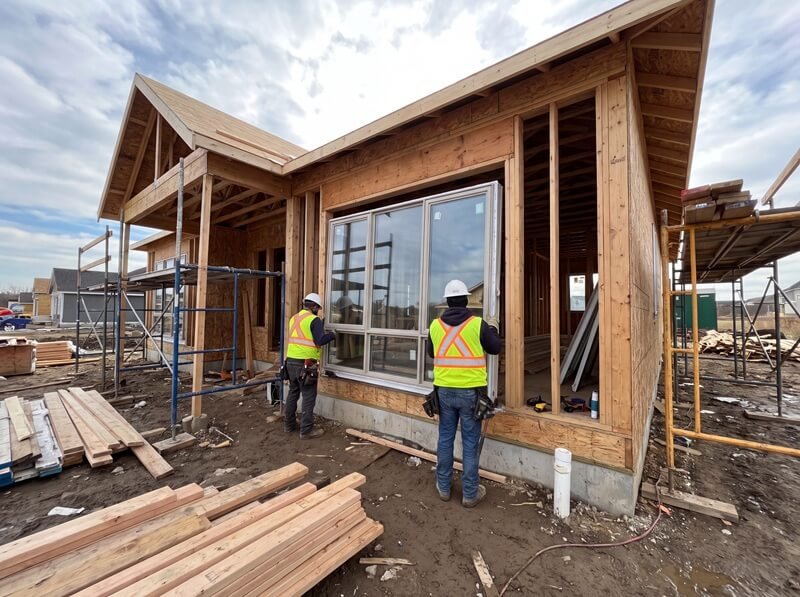
The table below covers finished IGU supply — glass, coating, gas fill, and spacer — before installation labor, framing, or delivery. These are mid-2026 ranges from fabricator quotes across key markets.
| Region | Low-E IGU (double silver) | Plain double-pane IGU |
| North America | ~$18–32/sq ft | ~$8–14/sq ft |
| Europe | ~€45–95/m² | ~€25–50/m² |
| China | ~¥150–450/m² | ~¥80–200/m² |
Actual pricing varies with unit size, coating spec, order volume, and port. Use these as a planning range, not a tender figure.
On the glass line item, Low-E typically runs 40–60% above plain double glazing. On a complete glazing project — once you include framing, labor, and ancillary costs that don’t change with the glass spec — that usually lands at an 8–18% increase in total glazing cost.
What drives the price difference between Low-E units?
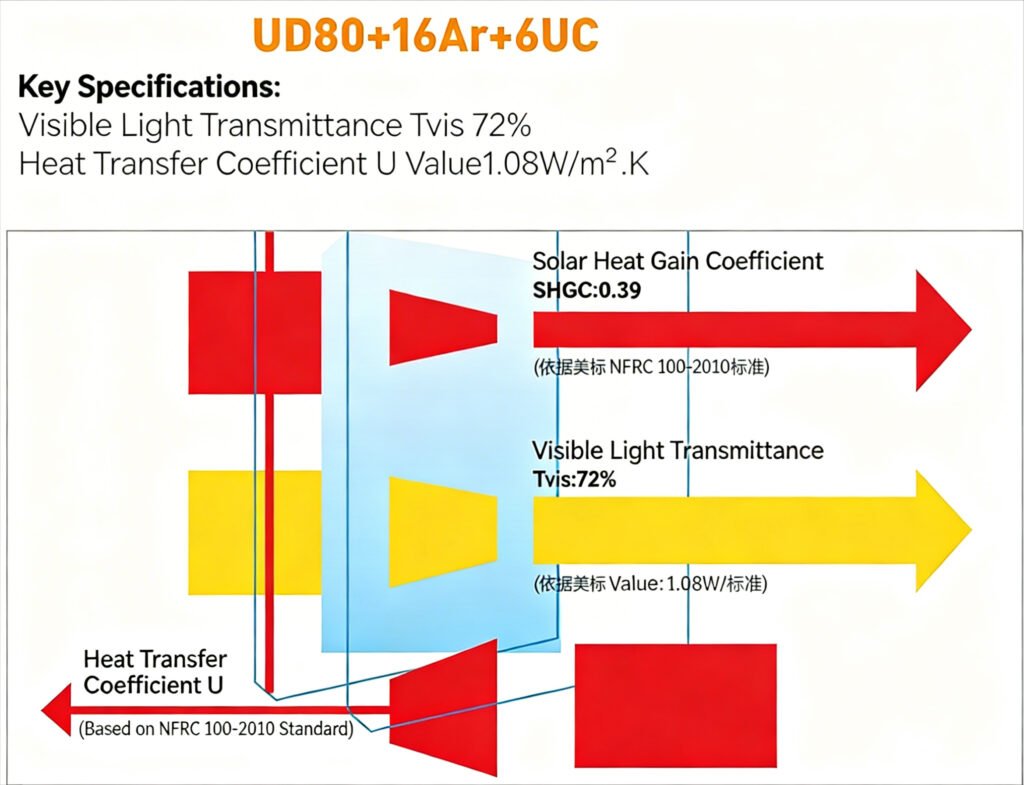
The main cost driver within Low-E is the number of silver layers in the coating stack. More layers means better thermal performance and a higher price.
| Coating tier | Silver layers | Performance | Price vs. plain double |
| Single silver | 1 | Entry — adequate for mild climates | Lower premium |
| Double silver | 2 | Standard — the default for most projects | Mid premium |
| Triple silver | 3 | Best — for cold climates and net-zero specs | 10–20% above double |
Triple silver used to carry a 30–50% surcharge over double silver. That gap has closed as deposition technology matured and production volumes increased. If your project has a 20-plus-year lifespan, it’s worth getting a triple silver price alongside double before you commit — the difference is often smaller than buyers assume, and the performance gain in cold or net-zero applications is meaningful.
The gas fill also affects price. Argon is the standard upgrade over air and improves thermal performance at moderate cost. Krypton goes further but is significantly more expensive and is generally reserved for triple-pane units with narrow cavities — it’s rarely the right call for standard double IGUs.
Which Climate Gets the Best Return?
Climate is the single biggest variable in payback — bigger than which supplier you buy from, and bigger than which coating tier you choose.
Cold climates — northern China, central and northern Europe, upper North America — show the strongest returns. The coating’s core job in winter is to keep the heat your building generates from escaping through the glass. When that runs for six months at a stretch, the savings accumulate quickly. Payback from a single-pane baseline in these zones runs in the 4–7 year range based on PNNL’s data.
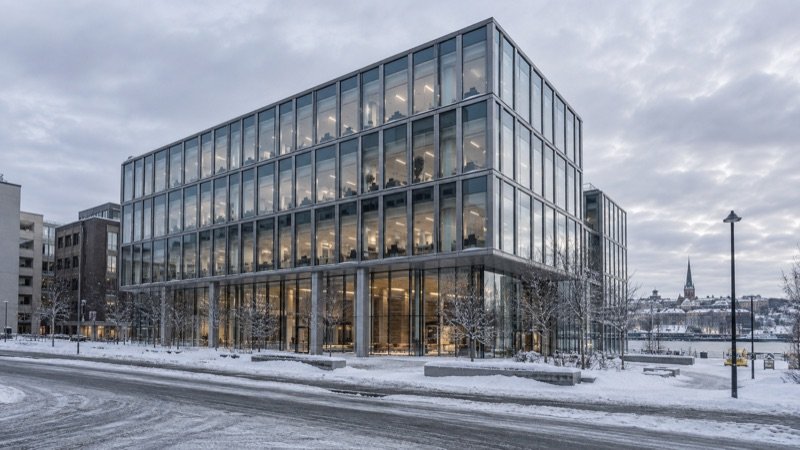
Hot climates — the Gulf, Southeast Asia, southern China through summer — also benefit strongly, but for a different reason. Here the coating is blocking incoming solar heat, not trapping indoor heat. That’s a meaningful load reduction in markets where cooling costs are high. The key is specifying the coating correctly for this mode, which brings us to SHGC.
Mixed climates — coastal Europe, central China, much of North America’s mid-latitudes — sit in between. Payback is real, typically 7–12 years from a single-pane baseline, but longer from functional double glazing. These projects benefit from a coating that balances both heating and cooling performance.
Mild climates — temperate coastal zones, highland regions where neither heating nor cooling runs hard — are the honest exception. In these markets, the energy payback alone rarely justifies the premium. If budget is constrained, better frames, warm-edge spacers, and improved air sealing usually deliver more value per dollar than the glass upgrade.
What SHGC should you spec for your climate?
SHGC — solar heat gain coefficient — measures how much solar radiation passes through the glass. Lower means less heat admitted. It’s the number buyers in hot climates most commonly underspecify, and it matters more than the coating tier in cooling-dominated regions.
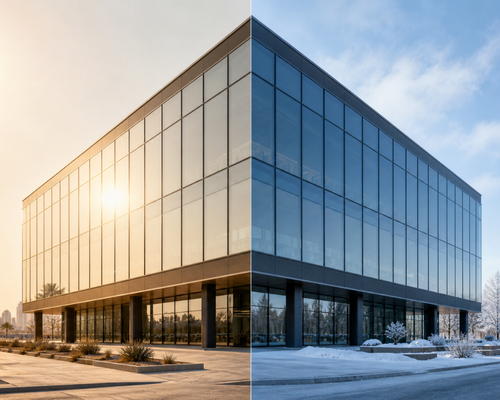
A Low-E unit with a high SHGC can work against you in a hot climate: it improves the U-value (heat conduction) but still lets significant solar radiation through, which increases your cooling load. The right spec for Gulf or Southeast Asia projects pairs a low U-value with an SHGC of 0.25 or below.
In cold climates, the trade-off runs the other way. A moderate SHGC in the 0.30–0.40 range lets passive solar gain reduce your heating load — free heat from south-facing glass in winter. Specifying an aggressively low SHGC in a heating-dominated climate removes that benefit without meaningfully reducing cooling costs.
ENERGY STAR’s four-zone framework captures this split cleanly for the U.S. market, and the underlying logic applies globally:
| Climate zone | Max U-factor | Target SHGC |
| Northern — heating-dominated | ≤0.27 | Higher (0.30–0.40) |
| North-Central — mixed | ≤0.30 | ≤0.40 |
| South-Central — cooling and heating | ≤0.30 | ≤0.25 |
| Southern — cooling-dominated | ≤0.40 | ≤0.25 |
For Middle East, Southeast Asia, and southern China projects: prioritize SHGC first, U-value second. For northern Europe, northeast Asia, and upper North America: invert that priority.
Why Does Your Low-E Glass Underperform?
It’s usually not the coating. This is a pattern we see often enough that it’s worth naming directly. A buyer specifies a premium Low-E unit, installs it, and the thermal performance doesn’t meet expectations. The coating gets the blame. Usually it isn’t the coating.
Window thermal performance is a product of four components working together. A premium coating in a poorly specified unit won’t deliver the expected result, and a whole-unit performance figure — not center-of-glass — is the only number that tells you what the installed system will actually do.
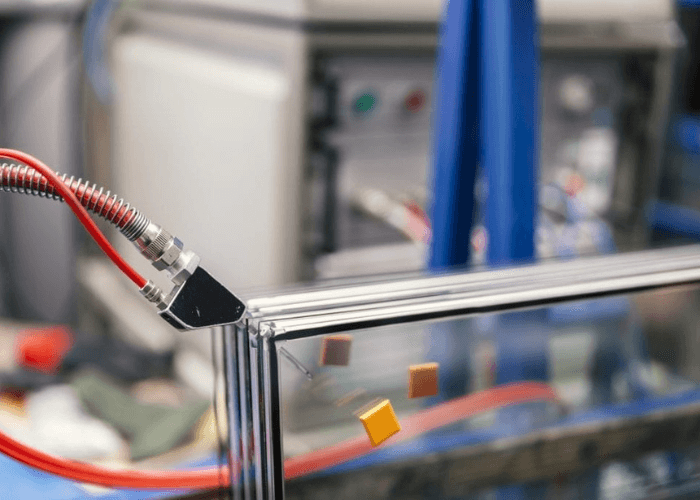
Does the gas fill in a Low-E IGU actually matter?
Yes — significantly. The gas fill reduces convective heat transfer between the panes, which directly improves the unit’s U-value. Argon is the standard upgrade over dry air and is specified in most quality double IGUs. Krypton performs better in narrow cavities but costs considerably more, and is generally reserved for triple-pane applications where the cavity is too thin for argon to work efficiently.
Gas fill concentration is one of the easier things to cut corners on during production — it’s invisible on delivery without a test, and the paperwork is easy to omit on a budget order. If argon is in your spec, ask for a gas-fill certificate confirming the concentration before the shipment leaves. Not every supplier includes this as standard, so it’s worth asking for upfront rather than chasing it later.
Do warm-edge spacers make a difference?
More than the price difference suggests. The spacer is the strip that holds the two glass panes apart at the edge of the IGU. A standard aluminum spacer conducts heat efficiently — which means it creates a cold strip around the perimeter of the unit where condensation appears first and where edge losses quietly undercut whatever the center-of-glass spec promised.
Warm-edge spacers in stainless steel, foam, or thermoplastic cut that edge thermal bridge significantly. They’re a modest upgrade in cost compared to the coating itself, and they protect the edge seal long-term by reducing the thermal stress that cycles the bond open and closed with temperature swings. On any performance glazing project, they’re worth specifying from the start rather than discovering they were omitted when you compare two quotes side by side.
How much does the frame hurt your Low-E performance?
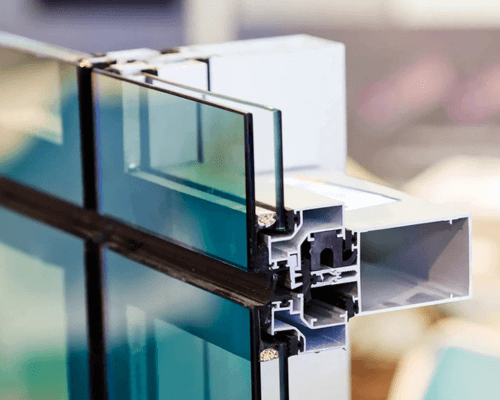
Enough to flip a spec that looks good on paper into a disappointment on site. An aluminum frame without a thermal break conducts heat directly between the interior and exterior face — its whole-frame U-value can run high enough to dominate the unit’s overall thermal performance, effectively neutralizing a meaningful share of what the coating delivers.
If aluminum sightlines are a design requirement, confirm the frame uses a genuine thermal break — a continuous non-conductive insert separating the inner and outer aluminum profiles. That’s a different product from standard aluminum extrusion, and the distinction matters. Vinyl, fiberglass, and composite frames insulate considerably better and are usually the right call when thermal performance is the priority and the sightline aesthetic is flexible.
The reason whole-unit figures matter more than center-of-glass: center-of-glass numbers capture the coating and gas fill but not frame losses, edge bridging, or spacer performance. When you’re comparing two quotes, insist on whole-unit U-value and whole-unit SHGC — those are the numbers that reflect what gets installed.
What Should You Ask Your Supplier?
Before confirming an order, request the following in writing. This isn’t bureaucratic box-ticking — it’s the difference between knowing what you’re getting and finding out after delivery.
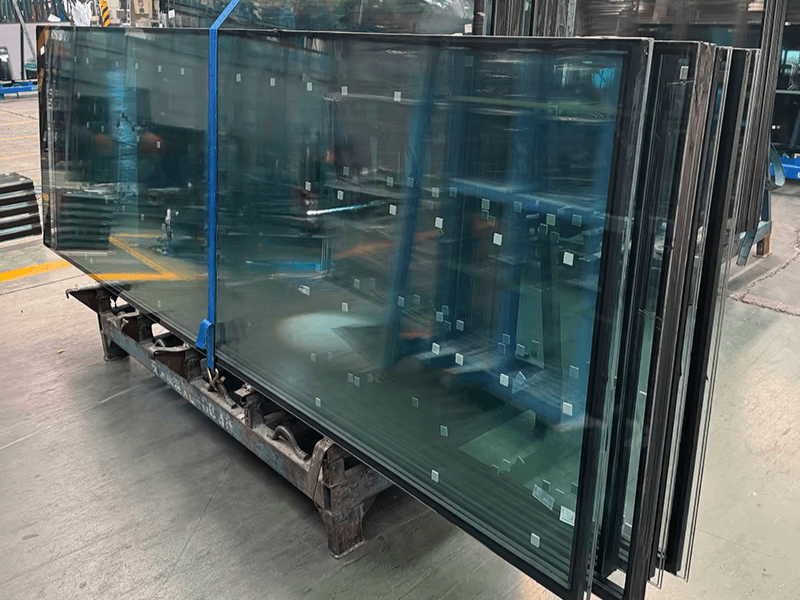
Thermal performance report — whole-unit U-value, SHGC, and visible light transmittance (VLT), tested on a representative sample. Not center-of-glass figures.
Coating surface position — which surface the coating sits on (surface 2 or surface 3 in the IGU). Confirm it matches the climate spec you settled on — hot climates typically want surface 2, cold climates surface 3. If your supplier can’t tell you which surface it’s on, that’s a red flag.
Gas fill certificate — if argon or krypton is specified, confirm the fill concentration. This is one of the more commonly omitted documents on budget orders, and it’s the only way to verify what’s actually in the unit.
Spacer specification — warm-edge or standard, and the material. If it isn’t specified, it defaults to aluminum.
Warranty document with exclusions listed — pay particular attention to whether sealed-unit failure (fogging between panes) is covered, and for how long. Also check whether coating discoloration in humid coastal environments is explicitly excluded — this is a common carve-out that only shows up in the full warranty text, not the sales summary.
On delivery, before signing off: check for scratches or coating streaks, confirm spacer corner keys are flush, verify the gas fill port is sealed, and match every unit label against the packing list. Photograph anything that doesn’t match. Most suppliers work within a 7-day acceptance window — once that closes, documentation is the only thing that supports a claim.
Is Low-E Glass Worth It for Your Project?
The honest version of that answer is a decision tree, not a verdict.
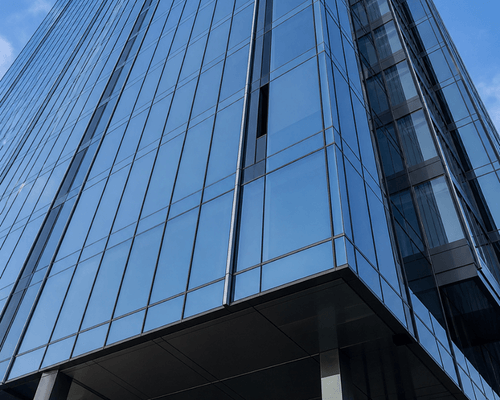
If you’re replacing single-pane glass in a cold, hot-arid, or mixed climate — yes, almost certainly. The energy savings are documented, the payback period is typically 4–13 years depending on climate zone, and the comfort improvement is immediate. This is the scenario where Low-E earns its premium clearly.
If you’re replacing functional double glazing in a cold climate — worth evaluating, but the math is tighter. The PNNL data puts payback at 10–14 years in colder zones. That’s still a reasonable return on a 20-plus-year building asset, but the case is weaker than the single-pane scenario and more sensitive to how well the rest of the building envelope performs.
If you’re replacing functional double glazing in a mild or temperate climate — the energy payback alone is unlikely to close within the building’s renovation cycle. Low-E still delivers comfort benefits, UV reduction, and reduced condensation risk. Those may be worth the premium for your project. They just shouldn’t be dressed up as an energy investment when the math doesn’t support it.
If you’re in a hot climate and haven’t specified SHGC yet — stop there before locking in any coating tier. The wrong SHGC in a cooling-dominated market can make a Low-E unit actively counterproductive. Get the climate spec right before the rest of the order follows.
The spec decisions that pay off most reliably: match U-value and SHGC to your climate before choosing a coating tier, specify warm-edge spacers, confirm the frame has a genuine thermal break if it’s aluminum, and compare whole-unit performance figures rather than center-of-glass numbers.
Frequently Asked Questions
Does Low-E glass actually save energy?
Yes — LBNL measured energy loss reduction of up to 40% compared to plain glass. How much of that shows up on your bills depends on climate and what you’re replacing; the glass doesn’t work in isolation from the rest of the building envelope.
How much does Low-E glass cost compared to regular glass?
On the glass line item alone, roughly 40–60% above plain double glazing. Across a complete project once framing and labor are included, that typically shrinks to 8–18% of total glazing cost — because those other costs don’t change with the glass spec.
Single silver, double silver, or triple silver — which do I need?
Double silver for most projects in mixed climates. Triple silver for cold climates and net-zero specs — the premium over double has fallen to roughly 10–20% and is often worth it on buildings with a 20-plus-year lifespan. Single silver only where payback is already marginal and budget is the constraint.
What’s the difference between U-value and SHGC?
U-value is about conduction — how fast heat moves through the glass regardless of sunlight. SHGC is about solar radiation — how much of the sun’s heat the glass admits. A single “Low-E” label tells you neither one. Always ask for both figures, and make sure they’re whole-unit measurements, not center-of-glass.
How long does Low-E glass last?
The coating doesn’t wear out inside a sealed IGU — it’s the edge seal that eventually fails. Well-made units run 20–30 years without issue. Fogging between panes means the seal has failed, not the coating; that’s typically a warranty claim, not a replacement spec.
Can Low-E glass be installed on existing windows?
Not as a factory coating — the sputtered coating has to be applied during manufacturing and sealed inside the IGU. Aftermarket window film marketed as “Low-E film” exists, but it performs considerably below a factory-applied coating and lasts 10–15 years at most. It’s a stopgap, not a substitute.
Is Low-E glass worth it in a mild climate?
On energy payback alone, usually not — simple payback can stretch past 15 years in low-load conditions. The case is still there for UV protection and reduced condensation, but the honest answer is that better frames and air sealing deliver more return per dollar in mild climates.
If you want thermal performance documentation for a specific project — U-value reports, SHGC data, gas-fill certificates, or coating position confirmation — reach out to our technical team. We include full documentation with every order, and we’re happy to walk through the spec before you commit.