The Short Answer: Yes, Mostly
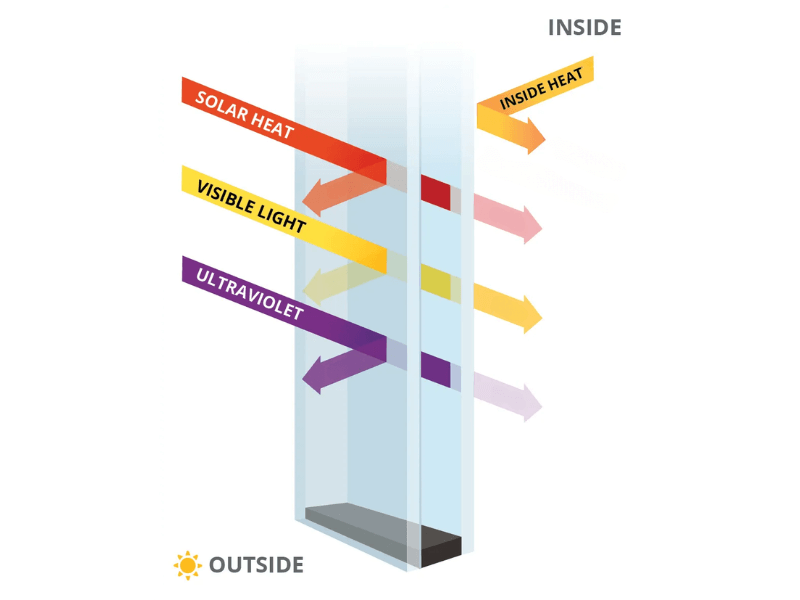
Most common houseplants — pothos, philodendron, snake plant, ZZ, peace lily, most ferns, even many orchids — grow perfectly well behind standard Low-E glass. Low-e coatings are thin metallic layers that filter out infrared heat while letting visible light through, not the 400–700 nm band plants use for photosynthesis.
In a typical single-silver insulated glass unit (IGU — two or three panes sealed together with a gas-filled gap), visible light transmittance (VLT) still sits at 70–82%, which is plenty for low-to-medium light plants.
The answer changes with a triple-silver Low-E built for cold-climate passive house performance, a solar-control Low-E built for tropical cooling climates, or a plant that genuinely needs bright direct light — succulents, herbs, fiddle leaf figs in deep interiors. Here’s how to tell which situation you’re in, and what to do about it.
If you’re choosing glass for a new build, our complete guide to Low-E glass covers how coatings work and how to read a spec sheet.
The Numbers That Actually Matter
Sunlight plants use for photosynthesis falls in the 400–700 nm range, measured at the leaf as photosynthetic photon flux density (PPFD) in µmol/m²/s. The heat you feel is mostly near-infrared (700–2500 nm) — the band Low-E is built to reflect.
VLT is the number on the spec sheet: the percentage of visible light that passes through the glass. A ten-point drop looks minor to a human eye, but to a plant it can be the difference between thriving and slowly starving, because50–150 µmol/m²/s — most winter windowsills fall well under that even on a sunny day.
“Bright window” isn’t a reliable measure — human eyes adapt logarithmically. A free lux-meter phone app held at the leaf surface is a rough but useful proxy: under 200 lux, no plant will be happy; 200–1,000 lux suits only low-light plants (snake plant, ZZ, pothos); 1,000–2,500 lux suits most foliage plants; above 2,500 lux, some direct-light plants start to thrive.
The 4 Types of Low-E Glass and How Each Affects Plants
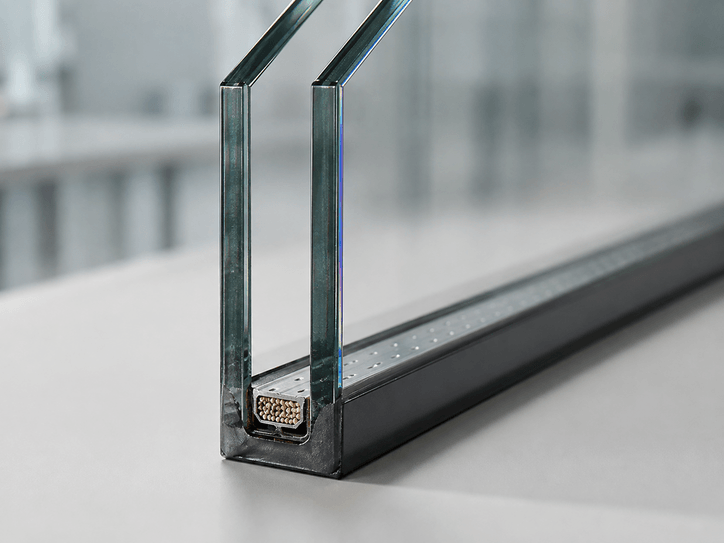
Figures below are typical mid-range values for a 6 mm / 12 mm air / 6 mm IGU; your specific product will vary by roughly ±5 points. If you’re choosing between single-, double-, and triple-silver Low-E for a project, this is where the trade-off lives — more silver layers means better heat rejection and lower VLT.
| Low-E Type | VLT (Visible Light %) | PAR Transmitted (relative to clear glass) | Solar Heat Blocked | Plant Impact |
| Single-silver Low-E (standard residential) | 70–82% | 90–95% | 40–55% | Minimal — most foliage plants unaffected |
| Double-silver Low-E (mid-range) | 60–72% | 80–88% | 55–70% | Slight reduction — watch medium-light plants in winter |
| Triple-silver Low-E (passive house / cold climate) | 50–65% | 70–80% | 70–85% | Noticeable — only low-light tolerant plants comfortable in deep interiors |
| Solar-control Low-E (tropical / cooling climates) | 25–45% | 30–50% | 80–90% | Heavy — many plants cannot survive without supplemental light |
Moving from single- to triple-silver costs roughly 15–20% of usable light in exchange for a real cut in heating/cooling bills — worth it in a Manitoba winter, not worth it for basil on a Miami counter. One nuance: “solar-control” and “high-performance” Low-E get used interchangeably but are different products with different goals.
If you’re in a cooling-dominant climate, your glass is probably solar-control — the most plant-hostile option on this list.
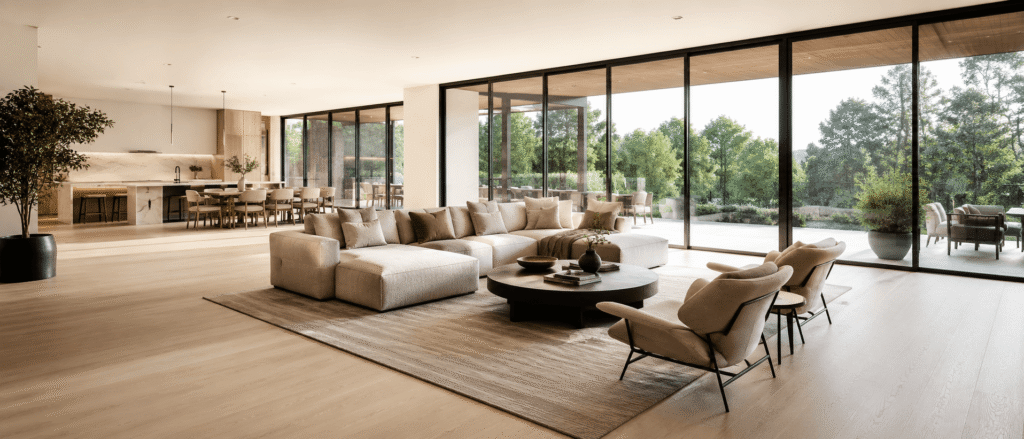
Heat matters too. Low-E reflects enough infrared that leaf-surface temperature in direct sun drops to roughly 35–45°C instead of 50–60°C behind clear glass — safer for tropicals in summer. But a south-facing Low-E pane can still become a cold radiant surface on winter nights, so keep leaves at least 10 cm from the glass in cold months regardless of coating type.
The Plant × Low-E Compatibility Matrix
A = thrives, B = fine with minor care, C = needs supplemental light, D = will decline. Assumes the plant is within 1 m of a window getting at least two hours of direct or bright indirect sun daily.
| Plant | Single-Silver | Double-Silver | Triple-Silver | Solar-Control |
| Pothos (Epipremnum aureum) | A | A | B | C |
| Snake plant (Sansevieria) | A | A | A | B |
| ZZ plant (Zamioculcas) | A | A | A | B |
| Peace lily (Spathiphyllum) | A | B | B | C |
| Philodendron (heart-leaf) | A | A | B | C |
| Monstera deliciosa | A | B | C | D |
| Fiddle leaf fig (Ficus lyrata) | A | B | C | D |
| Spider plant (Chlorophytum) | A | A | B | C |
| Boston fern (Nephrolepis) | B | C | C | D |
| African violet (Saintpaulia) | A | B | C | D |
If you have solar-control Low-E — typical of new construction in Florida, Singapore, Dubai, or southern China — and want a monstera or fiddle leaf fig, plan on a grow light from day one. No plant hack compensates for 50% PAR loss.
Plants That Thrive, and Plants That Struggle
Reliable behind any Low-E, including triple-silver: snake plant, ZZ plant, and pothos — all shade-tolerant species built for low light.
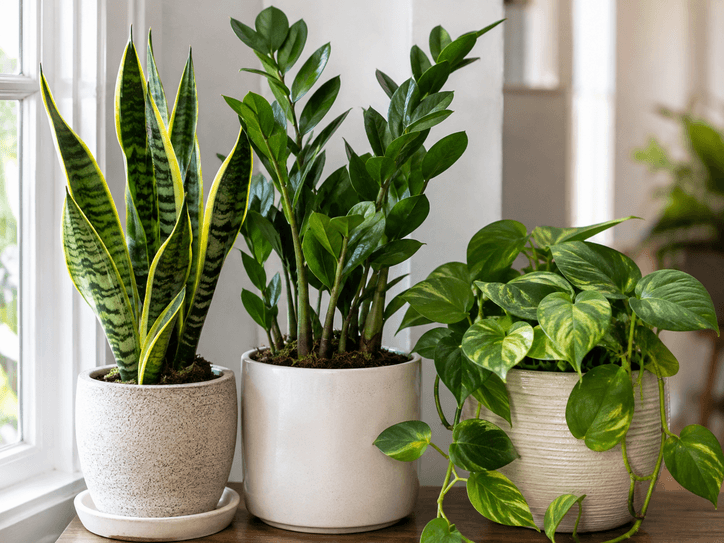
Reliable behind single- or double-silver (most homes): heart-leaf philodendron, peace lily, spider plant, cast iron plant, Chinese evergreen, Boston fern (needs humidity), African violet, phalaenopsis orchid, and begonia rex. Every one of these evolved on a forest floor under canopy — your living room behind Low-E glass is a bright clearing by comparison.
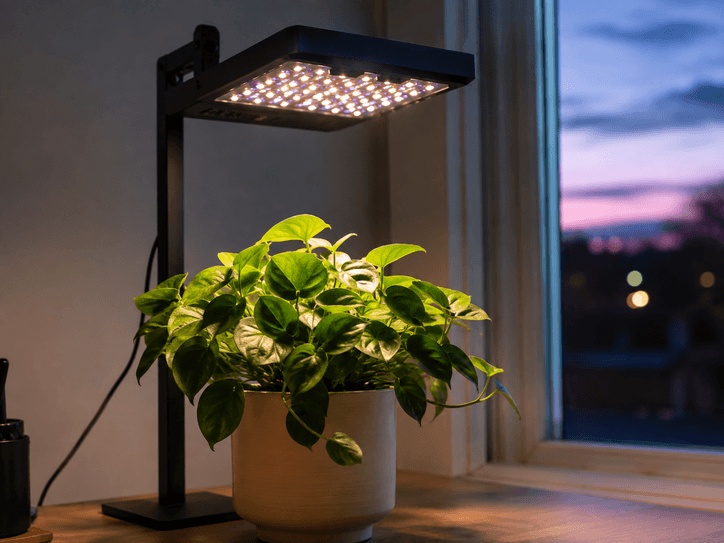
Will struggle behind standard Low-E: succulents and cacti, culinary herbs (basil, rosemary, thyme), fruiting plants (citrus, dwarf tomato, pepper), variegated cultivars (the pale leaf sections have little chlorophyll and need 2–3× more light), and high-light orchids (Cattleya, Vanda, Cymbidium). These are full-sun or greenhouse species — no window fixes that. A full-spectrum LED grow light on a 12-hour timer, 20–40 cm above the canopy, is the actual fix.
Diagnosing and Fixing a Struggling Plant
| Symptom | Likely Cause | Fix |
| Long, pale, stretched stems | Insufficient PAR | Move closer to window or add a grow light |
| Yellowing lower leaves, slow growth | Low light + overwatering | Reduce watering, add light |
| Brown crispy patches facing the glass | Direct sun scorch | Move back 30 cm or add a sheer curtain |
| Brown edges in winter, plant touching glass | Cold damage from the glass surface | Move 5–10 cm away from glass |
| No flowers on a plant that used to bloom | Insufficient light to trigger bloom | Add grow light or relocate |
Cheapest fixes first: move the plant closer to the window (30 cm can mean 30–50% more PAR, free), rotate weekly, clean the glass monthly (dust can block 5–15% of PAR), add a sheer curtain for summer scorch, or add a USD 25–60 grow light — which solves almost any light deficit behind almost any Low-E. Replacing the window is the last resort, not the first.
Quick Decision Card
Choosing new windows: ask for high-VLT (70%+) single-silver Low-E unless your climate genuinely calls for triple-silver or solar-control. If you must use triple-silver, budget for grow lights on any C/D-rated plant. If you must use solar-control, stick to A-rated species and plan supplemental lighting from day one.
Already struggling: don’t replace the windows — it’s the most expensive fix and least likely to help. Work through: move the plant → clean the glass → add a grow light → swap the species. All four together usually run under USD 50 per plant.
If you’re specifying glass for a project with a planted lobby, living wall, or greenhouse-adjacent space, tell us your climate and plant list — we’ll tell you which Low-E option actually supports it.