The fundamental difference lies in how they handle light. Anti-Glare (AG) glass uses a matte texture (etching) to scatter light, making it the superior choice for high-touch screens and reducing harsh glare in bright, uncontrolled environments. Anti-Reflective (AR) glass uses an optical coating to eliminate reflections entirely, making it the standard for museum cases and luxury retail where maximum clarity and “invisibility” are required.
- Choose AG if: You need durability, touch-resistance, and glare reduction (e.g., outdoor kiosks, spandrels).
- Choose AR if: You need high contrast, 99% light transmission, and perfect resolution (e.g., showcases, optical instruments).
Introduction
When sourcing high-performance glass for architectural or industrial projects, “Anti-Glare” (AG) and “Anti-Reflective” (AR) are often treated as interchangeable terms. They are not.
While both technologies aim to improve visibility, they solve optical problems through fundamentally different physics. Choosing the wrong one is the fastest way to miss readability targets or ruin the aesthetic of a facade. As your manufacturing partner, Hexad Industries created this guide to break down the technical differences, durability factors, and procurement metrics you need to specify the right glass for the job.
The Core Difference: Diffusion vs. Transmission
Before we can select a product, we must understand the behavior of light. Standard float glass—the clear material used in everyday windows—is not truly clear. It acts as a mirror. When light hits a standard sheet of glass, about 4% is reflected from the front surface and 4% from the back, resulting in roughly 8% total reflection. In a bright environment, that 8% is often brighter than the object behind the glass, washing out the image.
The fundamental divide between our two solutions lies in how they handle this light energy: AR manages light through interference, while AG manages light through scattering.
What is Anti-Glare (AG) Glass? (The “Matte” Effect)
Anti-Glare glass reduces perceived glare primarily by scattering (diffusing) reflected ambient light. Imagine a still lake reflecting the trees perfectly. Now, imagine a breeze ripples the surface. You can no longer see the distinct reflection of the trees; the image is broken up into a fuzzy wash of color.

AG glass replicates this effect. By micro-texturing the surface (often via acid etching), the glass redistributes reflections over various angles rather than bouncing them directly back into the viewer’s eye. This breaks up bright, cohesive highlights—like the reflection of a harsh overhead spotlight—so they are less objectionable.
Because AG works by diffusion, it is typically specified by haze (ranging from ~2% to >20%) and gloss levels, rather than just reflectance. It transforms a sharp glare into a soft glow. However, there is a trade-off: high diffusion can soften the image behind the glass, potentially reducing the resolution of high-definition displays.
What is Anti-Reflective (AR) Glass? (The “Invisible” Effect)
If AG is about managing reflections, Anti-Reflective glass is about eliminating them.
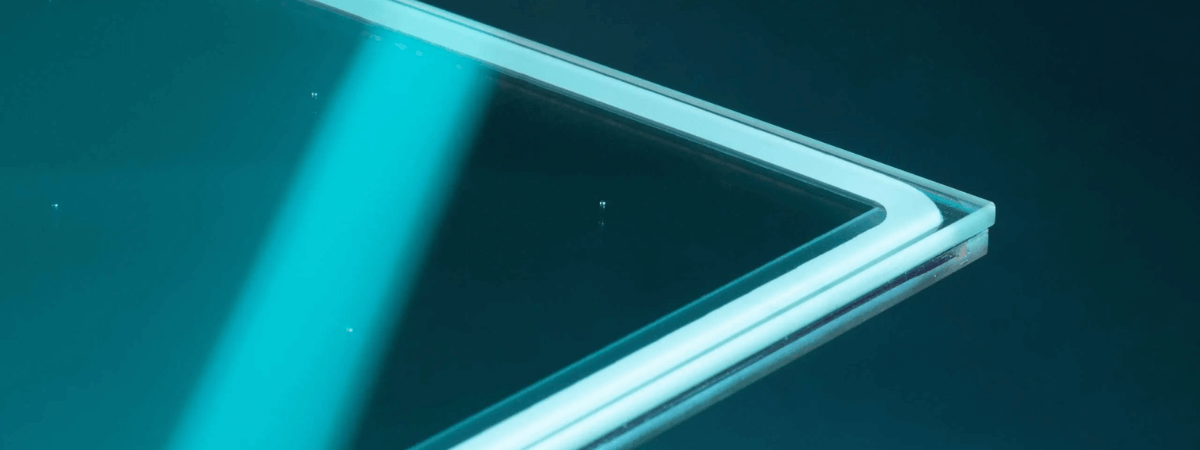
AR glass is designed to increase transmission and reduce specular reflectance (mirror-like reflections) to near zero. It uses thin-film interference coatings—layers of metal oxides with specific refractive indices—to cause reflected light waves to destructively interfere with one another. Think of it like noise-canceling headphones, but for light.
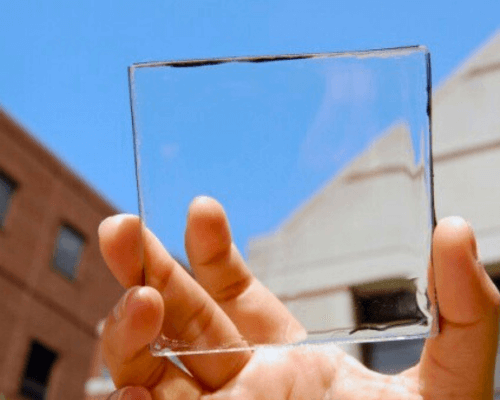
AR does not diffuse light; it allows it to pass through. Manufacturers often quote visible light reflection (LR) dropping from ~8% (on conventional float glass) to ≤1% for double-sided AR, with transmission (LT) rising to 98–99%. If your goal is “contrast through the cover” and invisible glass, AR is the technology of choice.
Side-by-Side Comparison Table: Specs at a Glance
To visualize how these distinct physical properties translate into tangible specifications, we’ve compiled the core metrics below.
| Feature | Anti-Glare (AG) | Anti-Reflective (AR) | Hybrid (AG + AR) |
| Primary Mechanism | Scattering / Diffusion | Thin-film Interference | Diffusion + Interference |
| Visual Effect | Matte / Satin finish | Crystal clear / “Invisible” | Low reflection with soft matte |
| Visible Reflection | ~8% (Diffused) | ≤1% (Eliminated) | ~0.5% (Diffused) |
| Light Transmission | Lower (depends on haze) | High (~98%+) | High |
| Surface Texture | Rough (Ra ~0.11–0.38 μm) | Smooth (Nanometer coating) | Textured + Coated |
| Primary KPI | Glare suppression in wide angles | Maximum clarity & throughput | Readability in direct sun |
Now that we have established the physics, let’s examine how these differences play out in the real world, starting with the visual experience.
Visual Performance & Aesthetics
The specifications on a datasheet tell only half the story. The other half is the subjective human experience—how the glass feels to the eye and how it interacts with the environment.
Clarity and Resolution: Why AR Wins for Retail
For luxury retail, museum display cases, or showrooms, the top Key Performance Indicator (KPI) is usually “lowest reflection / highest see-through clarity.” In these environments, you want the barrier to disappear entirely so the focus remains on the jewelry, the artifact, or the mannequin.
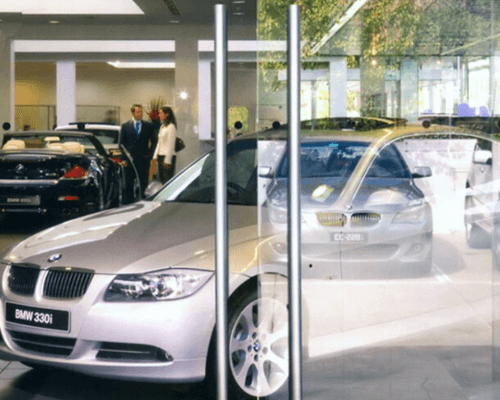
AR dominates here because it is non-diffusive. It allows the viewer to see the product with perfect resolution and true color rendering (often achieving a CRI of ~99-100). AG glass, by contrast, creates a physical barrier of texture. If the haze level is too high, or if the glass is spaced too far from the object, the view can appear slightly “milky” or washed out. For high-end retail, that loss of crispness is often unacceptable.
Reflection Control: How AG Handles Direct Sunlight
However, AR has a weakness: uncontrolled lighting. If your project involves viewing angles that vary significantly—such as a public kiosk outdoors or a brightly lit atrium—AR coatings may still show a “ghost” reflection. This is a faint, purple-hued mirror image that appears at acute angles.
This is where AG dominates. When the goal is to hide harsh reflections across wide, unpredictable angles, diffusion is superior to interference. Instead of trying to eliminate the sun’s reflection (which is nearly impossible given the sun’s intensity), AG scatters it. This ensures that the display or interior remains readable, even if the “sharpness” is slightly reduced.
The “Sparkle” Factor: Understanding Grain in AG Glass
For projects involving high-resolution digital displays (like interactive directories or medical monitors), buyers must be wary of a phenomenon known as “sparkle.”
Sparkle is a grainy speckle effect caused when the random microstructure of the AG surface acts as a lens. These tiny “lenses” interfere with the pixel geometry of the screen behind the glass, refracting the red, green, and blue sub-pixels. To the viewer, it looks like shimmering dust on the screen. When sourcing AG for displays, you must insist on “Anti-Sparkle” or “Low-Sparkle” specifications. In these products, the etching process is chemically tuned to minimize this interference, balancing the need for glare reduction with the need for pixel clarity.
Visual performance is critical, but in B2B architecture, longevity is king. How do these two technologies hold up against wear and tear?
Durability and Maintenance (ROI Analysis)
A beautiful facade that scratches in six months is a failure. Understanding the mechanical differences between AG and AR is essential for calculating the Return on Investment (ROI) and maintenance cycles of your project.
Scratch Resistance: Chemical Etching (AG) vs. Optical Coatings (AR)
Durability is not simply “one is fragile, one is strong,” but the failure modes differ significantly.
Anti-Glare (Etched): Since the texture is etched into the glass substrate itself, there is no film to delaminate. The “matte” finish is actually the glass. This makes it mechanically superior for high-touch areas. It is nearly impossible to “scratch off” the anti-glare property because it is integral to the material.
Anti-Reflective (Coated): Durability here depends entirely on the application method. High-quality AR uses dense, magnetron-sputtered oxides that can be very hard (>5H to 9H pencil hardness). However, cheaper porous sol-gel coatings (common in solar applications) can be much softer. Crucially, if you scratch AR glass, you break the interference layer. This results in a bright, white scratch that is highly visible against the dark, non-reflective background. Always request ISO 9211-4 abrasion test results for AR products.
Cleaning Protocols: Fingerprints, Oil, and Commercial Maintenance
The maintenance team will thank you for considering this next point.
AG: The rough texture of AG glass is excellent at hiding scratches, but it can trap lipids and oils (fingerprints). Depending on the “pore morphology” of the etch, a fingerprint can sometimes look like a dark smudge that requires effort to wipe out.
AR: High-quality AR often includes a hydrophobic or oleophobic (anti-fingerprint) topcoat. This makes the surface slick and easy to clean—initially.
However, this top layer is a chemical additive. Over years of commercial cleaning with ammoniated products, this topcoat can wear off. Once it’s gone, AR glass becomes a “fingerprint magnet,” as the oils disrupt the optical coating and create distinct smudges.
Weathering the Elements: Exterior vs. Interior Lifespans
When moving outdoors, the rules change.
For exterior glazing, acid-etched AG is generally chemically inert. It handles weathering, acid rain, and UV exposure identically to standard float glass. It is a “set it and forget it” solution for facades.
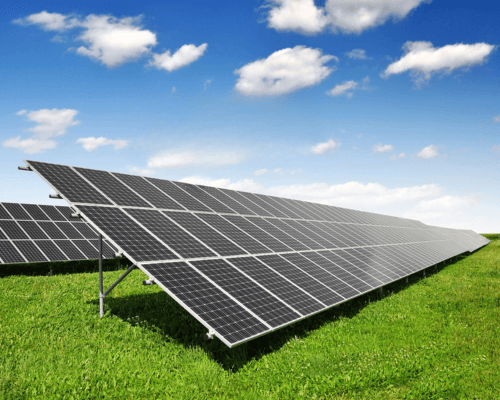
AR coatings, however, must be specifically engineered for exterior use. While some PV (solar) AR coatings last 15+ years, others degrade in less than a year if not properly sealed, developing a cloudy or oxidized appearance. For exterior AR, you must ensure the specification requires resistance to salt spray (ASTM B117) and humidity cycling (ISO 9022).
With durability factors weighed, we can now map these technologies to specific architectural use cases.
Application Guide: When to Choose Which
At Hexad, we categorize recommendations based on the primary function of the glass: privacy, transparency, or readability.
Best for Exteriors: Facades, Cladding, and Spandrels
Choice: Anti-Glare (Etched)
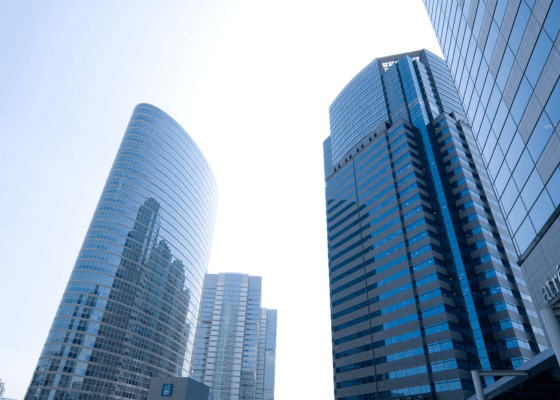
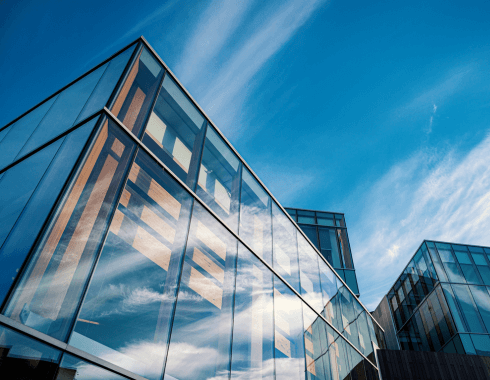
Architects often use acid-etched AG glass for spandrels and cladding to create a consistent, soft, satin aesthetic. The diffusion effect helps reduce light pollution—a growing concern in urban planning—by softening the reflection of the sun or streetlights. Furthermore, AG offers privacy and effectively hides internal building structures (like concrete slabs or HVAC) without the risk of coating delamination that plagues some exterior films.
Best for Interiors: Museums, Luxury Showcases, and VIP Boxes
Choice: Anti-Reflective (AR)

When the barrier needs to disappear, specify double-sided AR. Ideally, use low-iron glass substrates to maximize transmission. Standard clear glass has a slight green tint; combining that with AR can mute the effect, but low-iron + AR is the pinnacle of invisibility. This is the standard for museum vitrines and stadium VIP glazing, where reflections would disturb the view of the game or the art.
Best for Digital: Outdoor Signage and Interactive Kiosks
Choice: Hybrid (AG + AR)
This is the “gold standard” for readability in challenging environments. A hybrid stack uses an AR coating to increase light transmission (brightness) and an AG texture to diffuse direct sunlight. This ensures the screen remains readable even when the sun hits it directly, while preventing the mirror-effect associated with standard glass. It is the most expensive option, but for digital drive-thrus or wayfinding kiosks, it is necessary.

Specifying the right glass is one thing; paying for it and manufacturing it is another. Let’s look at the supply chain.å
Cost and Manufacturing Considerations
Understanding the production floor helps you understand the price tag. The cost difference between AG and AR is driven by the complexity of the machinery involved.
Price Comparison: Material Costs vs. Installation Value
Generally speaking, AG glass has lower scaling costs. It uses wet chemical processes (acid baths) that can treat large sheets relatively quickly. The cost driver here is quality control—ensuring the consistency of the “sparkle” and gloss levels across the entire sheet.
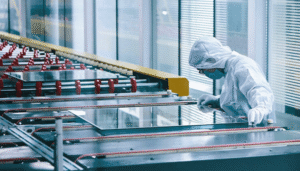
AR glass typically commands a higher premium. It requires high-CapEx vacuum deposition equipment (magnetron sputtering) and strict cleanroom environments to prevent pinholes and defects. The energy and time required to sputter nanometer-thin layers onto the glass make it more expensive per square meter. However, the value of AR lies in the user experience; for a high-end storefront, the extra cost is negligible compared to the increase in perceived brand value.
Production Techniques: Sputtering, Dipping, and Acid Etching
It helps to know the lingo when talking to suppliers:
- Sputtering (AR): High-energy ions dislodge coating material onto the glass in a vacuum. Produces dense, hard coatings.
- Sol-Gel (AR): The glass is dipped in a chemical solution and cured. Common in solar, but verify durability for architectural use.
- Acid Etching (AG): Uses hydrofluoric acid to remove silica from the surface, creating a permanent texture.

Availability and Lead Times for Custom Sizes
A major logistical consideration is whether the glass can be cut and tempered after processing.
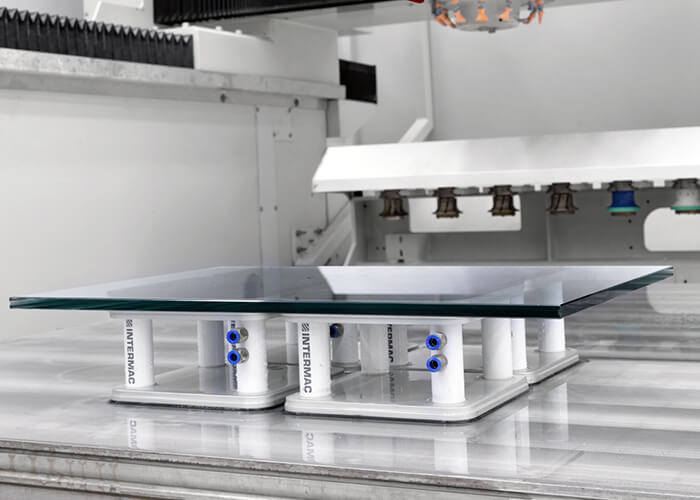
- AG: Because it is just etched glass, it can be stocked in large sheets, cut to size, and tempered locally. This keeps lead times short.
- AR: Most AR coatings cannot survive the tempering furnace. This means you usually have to cut and temper the glass first, and then send it to be coated. This adds weeks to the lead time. (Note: “Temperable AR” coatings exist, but they are a specialty product).
Before we wrap up, let’s address a few specific scenarios we hear about frequently.
Frequently Asked Questions (FAQ)
Can I combine Anti-Glare and Anti-Reflective technologies?
Yes. As mentioned in the “Hybrid” section, this is common for high-end displays. The glass is usually acid-etched first to create the texture, and then the AR coating is applied over the texture. This offers the best of both worlds—diffusion of harsh light and high transmission—but it is the most expensive option due to the dual processing steps.
Which glass is best for bird-friendly building codes?
Anti-Glare (Etched) is generally safer for birds. The haze and matte finish make the surface visible to birds, preventing collisions. Crystal-clear AR glass can be incredibly dangerous to avian life because it is so invisible. If you must use AR in a bird-flight zone, it must be specifically treated with a UV pattern or frit that is visible to avian eyes but subtle to humans.
Does Anti-Reflective glass require special cleaning fluids?
Generally, yes. You should avoid abrasive creams or highly acidic/alkaline cleaners that can strip the oleophobic topcoat or damage the optical layers. Neutral pH cleaners and soft microfiber cloths are recommended. AG glass is more forgiving of standard commercial cleaners.
How do these glasses affect Solar Heat Gain (SHGC)?
AR glass increases transmission, meaning it allows more solar energy to pass through than standard glass (resulting in a higher SHGC). If solar heat gain is a concern, the AR coating should be combined with a Low-E (Low-Emissivity) coating or a tinted substrate to manage the thermal load without sacrificing clarity.
Conclusion: Final Checklist for Your Glass Specification
The choice between Anti-Glare and Anti-Reflective glass is not just about “matte vs. shiny.” It is a strategic decision that affects the usability, longevity, and safety of your architectural project.

To ensure comparable bids and performance, do not leave the spec open to interpretation. Your RFQ should include:
- Optical Metrics: Specify Photopic Reflectance (e.g., <0.5% for AR) vs. Haze % and Gloss Units (for AG).
- Spectral Data: Request Transmittance curves (380–780 nm) to check for color neutrality.
- Texture Spec: For AG, define the Roughness (Ra) to control the tactile feel and sparkle.
- Durability Standard: Require testing to ISO 9211-4 (Abrasion) or ASTM D1003 (Haze) to ensure the glass survives the environment.
- Inspection Criteria: Define the cosmetic standard (e.g., viewing distance and lighting for defect inspection).
Still unsure which physics fit your facade?
Hexad Industries specializes in navigating these trade-offs. Whether you need a sample kit to compare the “sparkle” or a consultation on exterior durability, we are here to ensure your glass performs as beautifully as it looks.