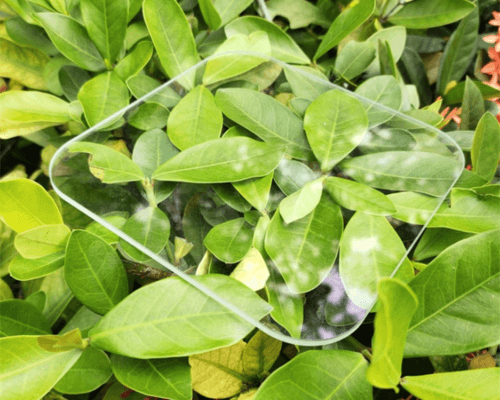
Anti-Reflective (AR) glass is high-performance architectural glazing engineered to eliminate the surface reflections typical of standard float glass. By reducing the visible “mirror effect,” AR glass becomes virtually invisible, maximizing transparency and ensuring the visual focus remains on the display or view behind the glass rather than the glazing itself.
Technical Principles
Unlike “anti-glare” treatments (which diffuse light via acid-etching), AR glass maintains optical clarity through optical interference. One or multiple layers of metal oxides are applied to the glass surface—typically using magnetron sputtering technology. These layers are calibrated to a precise thickness of ¼ of the light’s wavelength.
This geometry creates destructive interference: light waves reflecting off the coating cancel out waves reflecting off the glass substrate. This process reduces surface reflectance from approximately 8% (in standard clear glass) to less than 1%, while boosting Visible Light Transmission (VLT) to >98%.
Specification Notes
When specifying AR glass for high-traffic or high-visibility projects (such as luxury retail or museum vitrines), two factors determine the longevity and quality of the product:
- Coating Hardness: Soft-coat AR is prone to scratching during cleaning. For architectural applications, it is critical to specify hardened, abrasion-resistant coatings to ensure the glass maintains its invisibility over time.
- Color Neutrality: Inferior AR coatings can exhibit a “residual purple” or blue hue when viewed at an angle. At Hexad, we mitigate this by adhering to strict spectrophotometric tolerances, ensuring that the glass remains color-neutral and consistent across different production batches and glass thicknesses.