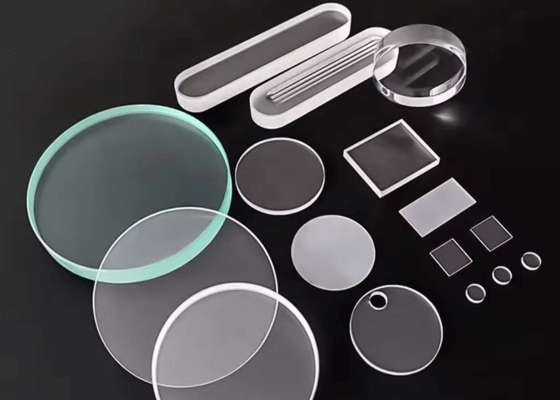
A standard double-pane window lets through about three-quarters of the sun’s heat.
We see what that means every winter on the production floor. A building owner pays to heat a room. The glass quietly hands that heat right back outside. Low-e glass exists to stop that handoff.
Here’s the simple version. Low-e glass is ordinary float glass with a microscopically thin metallic coating on one surface, usually silver-based. That coating reflects heat back while still letting light through. It drops the glass’s emissivity — basically, how much heat it radiates away — from about 0.84 down to as low as 0.02.
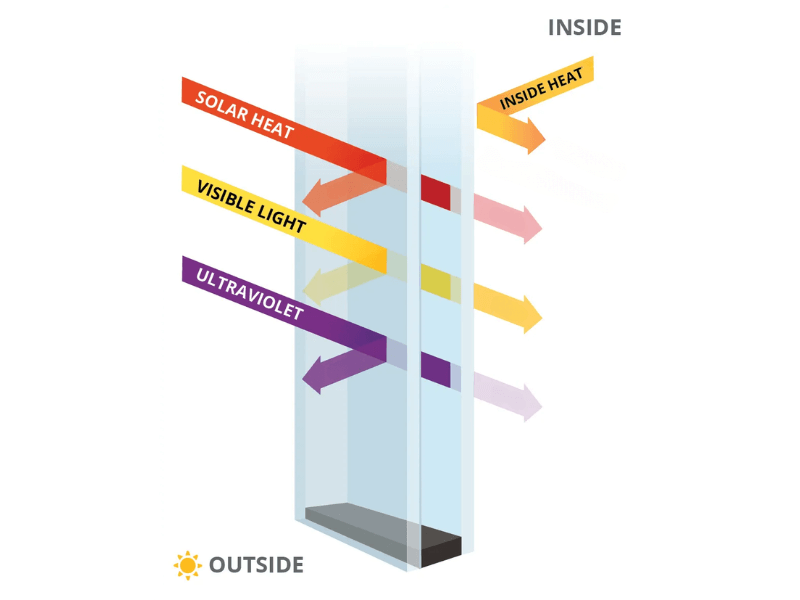
In real terms, the U.S. Department of Energy estimates this cuts window-related energy loss by 30% to 50%, for a cost premium of only 10% to 15%. It also blocks 90% to 95% of UV radiation, which is the main reason your furniture and flooring fade in direct sun.
That’s the headline. Now let’s slow down and walk through it properly — what the coating actually does, how to pick the right one for your climate, and how to make sure what you order is what you actually get.
What’s Actually Happening on the Glass
Low-e is short for low emissivity. Emissivity is just a number between 0 and 1 that tells you how much heat a surface gives off. The higher the number, the more heat it radiates away. Standard clear glass sits around 0.84.
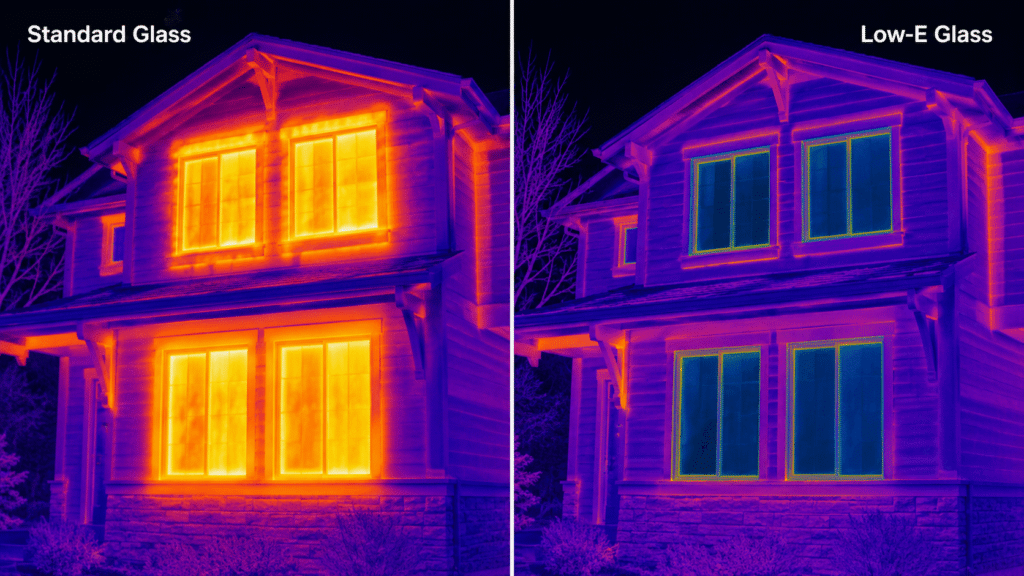
Think about what that means in practice. A single pane of glass absorbs heat from inside your room, then re-radiates most of it straight back outside. That’s why an uncoated window always feels cold to stand near in winter — even with the heater running.
A low-e coating can bring that number all the way down to 0.02.
What’s in the Coating
The coating itself is just a stack of very thin metallic layers, usually silver, sometimes blended with other metals. It sits on one face of the glass.
To the eye, it’s invisible. You won’t see it, and you won’t feel it.
So how do you know it’s there? Two ways. You can check the product data sheet, or you can run the simple flame test. Hold a lighter near the glass at an angle and look at the reflection. A standard pane reflects one flame image. A low-e pane reflects two — and one of them will show a slightly different color than the other.
Why It Still Looks Like Ordinary Glass
Here’s the part people find counterintuitive. If the coating is reflecting heat, why doesn’t the glass look tinted or mirrored?
Sunlight is really a mix of three things. Visible light, the part your eye sees, makes up about 40% of it. Ultraviolet light, the part that fades fabric and wood, is only about 3% to 7%. The rest, roughly half, is near-infrared — the part you feel as warmth on your skin.
A low-e coating is tuned to let visible light straight through, while reflecting almost everything in the infrared range. It isn’t blocking light. It’s being selective about which wavelengths it lets pass.
That’s the whole trick, and it’s also why a low-e window looks exactly like any other window from the street.
Now that you know what the coating is doing, the next question is the one that actually matters for your project: which version of it do you need?
Start With Your Climate, Not the Product
This is the decision most people get wrong, and it’s worth slowing down for. Get this one right, and almost everything else falls into place.
The wrong coating in the wrong climate can quietly work against you. It might block heat you actually want in winter, or let in heat you’re trying to keep out in summer.

If You’re in a Cold Climate
You want what’s called a passive, or high solar gain, coating.
These are built to let in as much solar heat as possible, while still cutting down on conductive heat loss. They’re the right call for heating-dominated climates, and especially for south-facing glass, where free solar warmth in winter is genuinely useful rather than a problem.
Target SHGC for these typically falls between 0.40 and 0.60. (More on what SHGC means in a moment.)
If You’re in a Hot Climate
You want the opposite: a solar control, or low solar gain, coating.
These reflect more incoming infrared back outside, keeping interiors cooler. They make sense for hot-dominated climates, for west- and south-facing glass anywhere, and for any building where summer cooling is what really drives the energy bill.
Target SHGC here is lower, usually between 0.20 and 0.35.
If You’re Somewhere in Between
Most places fall into this category — most of the U.S., most of central Europe, most of China.
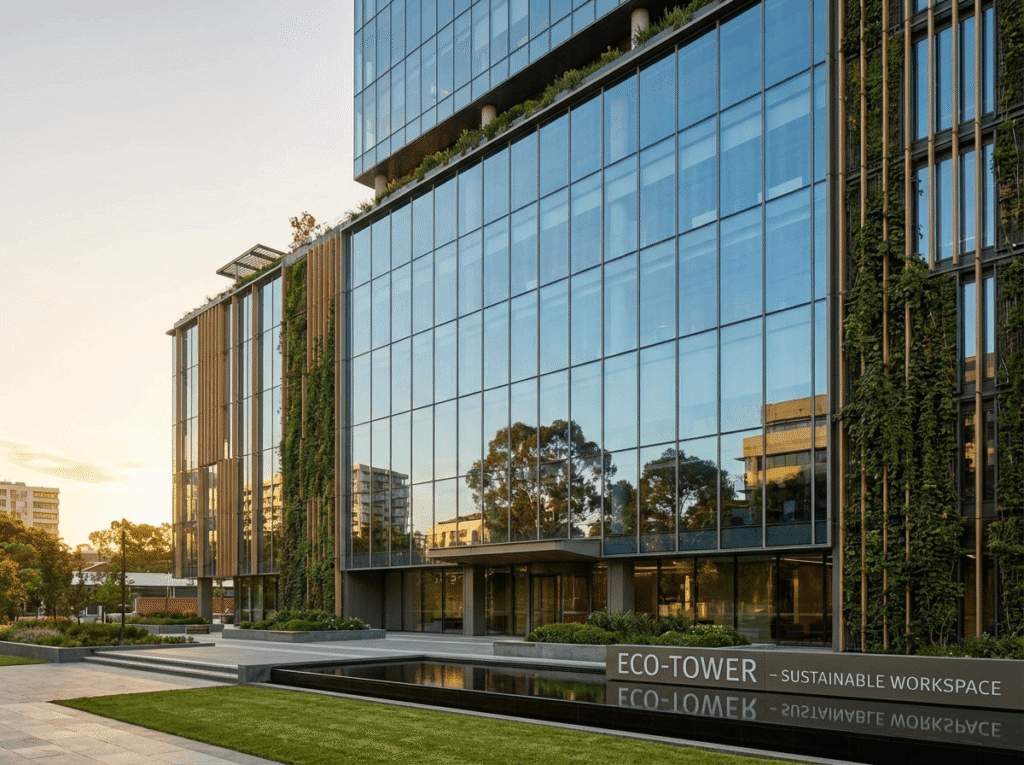
Here you’ll want what’s called a spectrally selective coating, which lets in plenty of visible light while still blocking most of the infrared heat. We’ll explain exactly how to spot one of these on a spec sheet a little further down.
Not Sure Which Zone You’re In?
A simple way to check: compare your area’s heating degree days against its cooling degree days. Most national weather services publish both.
If heating days clearly outnumber cooling days, go passive. If it’s the reverse, go solar control. If they’re roughly even, you’re in mixed-climate territory.
With your climate strategy settled, the next question is how the coating actually gets made — and that changes how it has to be handled.
Two Ways to Make a Low-E Coating
Every low-e coating is made one of two ways, and the difference isn’t just performance. It changes how the glass can be cut, stored, shipped, and installed.
Hard Coat, the Older and Tougher Option
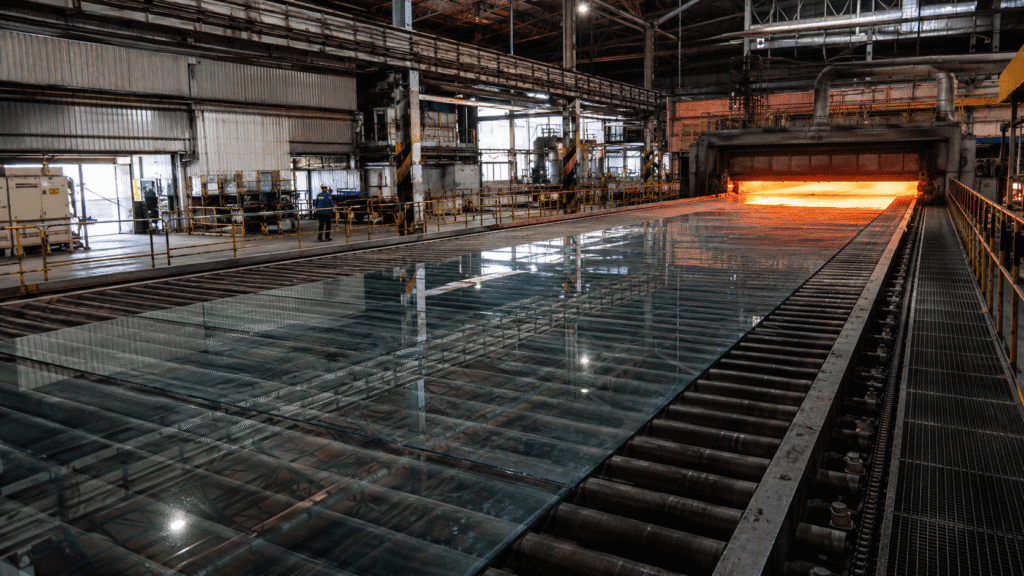
Hard coat — also called pyrolytic — is the more forgiving process.
The coating is sprayed onto the glass while it’s still hot, right during manufacturing, at around 1,200°F (650°C). The metal bonds chemically into the glass surface as it cools.
The result is glass you can touch, store, ship, and cut without any special precautions. It behaves like ordinary glass.
Hard coat typically lands at an emissivity of 0.15 to 0.20, with visible light transmittance around 0.70 to 0.80.
Soft Coat, the Higher-Performance Option
Soft coat is more delicate, but it performs significantly better — and it’s the default for most modern energy codes today.
Here, pre-cut glass sheets go into a vacuum chamber. A process called magnetron sputter vacuum deposition, or MSVD, builds up multiple ultra-thin metal layers on the surface at room temperature.

The tradeoff is durability. Soft coat can be damaged by handling, by moisture, or by the wrong sealant, and it can’t be re-cut once it’s been applied.
In exchange, it can reach an emissivity as low as 0.02 — with some formulations holding over 70% visible light transmittance at the same time.
Single, Double, or Triple Silver
You’ll often see soft-coat products described by how many silver layers are in the stack.
Single silver, with one layer, gets you basic performance at a lower cost — emissivity around 0.05 to 0.10. Double silver, with two layers, is the mainstream choice for most projects today, landing around 0.02 to 0.05.
Triple silver goes further still, with three silver layers across 12 or more total coating layers. It pushes emissivity below 0.02 while holding high visible light, low solar gain, and neutral color, all at once. This is what shows up on most premium curtain walls and Passive House projects.
One Detail Worth Knowing: Edge Deletion
Here’s something most guides skip entirely, but it matters a lot if you’re sourcing IGUs — insulated glass units, where two or more panes are sealed together with a gas-filled gap in between.
Any soft-coat glass that touches the sealant inside an IGU needs the coating stripped away in a narrow band around the edge, usually 8mm to 12mm. This is called edge deletion.
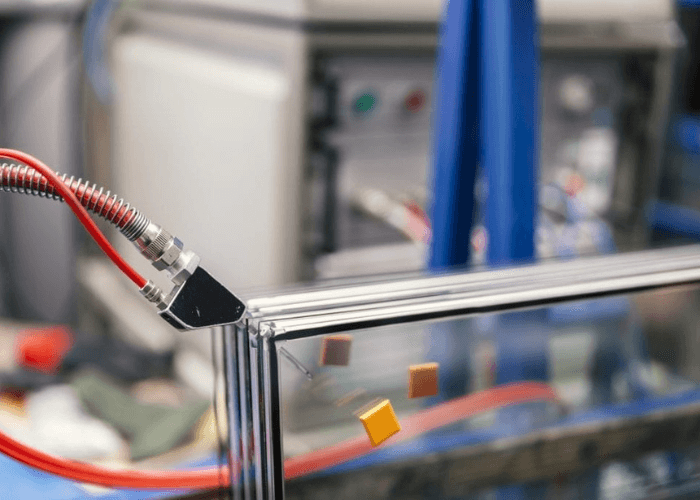
It’s a required step, not optional. Skip it, and the coating can react with the sealant over time. Moisture works into the edge, the coating delaminates, and the seal fails years before it should.
If you’re sourcing IGUs, just ask the manufacturer directly whether they edge-delete as standard. Any hesitation there is worth paying attention to.
You now know what you need, and what it’s made of. The next step is making sure the quote you’re holding actually matches that.
Making Sure You’re Getting What You Paid For
A quote can say all the right words and still not deliver the right glass. Here’s how to actually check.
The Four Numbers on Every Spec Sheet
These four metrics tell you almost everything you need to know, and all four appear on the official NFRC label that comes with certified glazing.
| Metric | What It Measures | Scale | Target, Cold Climates | Target, Hot Climates |
| U-Factor | How much heat passes through | 0.1 (best) to 1.0 (worst) | Below 0.30 | Below 0.40 |
| SHGC | How much solar heat gets in | 0 (blocks all) to 1 (passes all) | 0.40–0.60 | 0.25–0.40 |
| VLT | How much visible light gets through | 0 (opaque) to 1 (clear) | 0.40–0.70 typical | 0.40–0.70 typical |
| LSG | VLT divided by SHGC | Higher is better | 1.25+ is spectrally selective | 1.25+ is spectrally selective |
A lower U-factor is always better — that one’s simple. SHGC and VLT are different. There’s no universal “good” number for either one. The right number depends entirely on your climate and your orientation.
Where the Coating Actually Sits
This is the part most guides explain badly, and it genuinely matters.
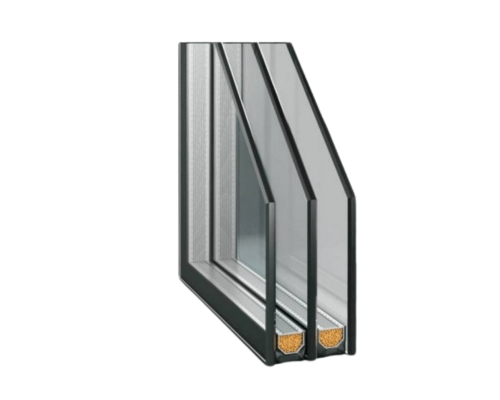
In a standard double-pane IGU, the glass has four surfaces, numbered from outside in. Surface 1 faces the weather. Surface 2 faces the sealed gap, from the outer pane’s side. Surface 3 faces that same gap, from the inner pane’s side. Surface 4 faces your room.
Where the coating sits isn’t a style choice. It decides whether the window is built for keeping winter heat in, keeping summer heat out, or a bit of both.
For cold climates, you generally want the coating on Surface 4 — it reflects your room’s heat back inward. For hot climates, Surface 2 is usually right — it reflects incoming heat back outside before it even reaches the gap. For mixed climates, Surface 3 is the common middle ground, or you can use a triple-pane unit with coatings on both Surface 2 and Surface 4.
If a supplier can’t tell you exactly which surface the coating is on, that’s worth pushing on before you order anything.
Five Questions Worth Asking Before You Order
A vague answer to any of these is worth paying attention to.
- What’s the exact U-factor, SHGC, and VLT for this specific product — not a range, but specific numbers?
- Is the coating hard coat or soft coat, and which surface is it on?
- What’s the gas fill, and what’s the IGU warranty?
- Do you edge-delete soft-coat products as standard?
- And can you provide a full-size sample, or a reference from a similar project?
You now know how to verify the spec. What’s left is the honest part — what you really get out of this, and where things can still go wrong even when you’ve done everything right.
What You’re Really Getting
The Energy Savings, in Real Numbers
That 30% to 50% reduction in window-related energy loss is a real DOE figure, and it holds up across both residential and commercial buildings.
On a facade-scale commercial project, that translates into a meaningful difference in your annual operating cost — though the exact number depends a lot on local energy rates and the building itself.
On payback specifically, a Lawrence Berkeley National Laboratory field study monitored six homes in Chicago through a full heating season. Low-e storm windows there cut heating load by 21%, with payback averaging under 4.5 years — notably faster than the 10-year payback measured on clear-glass storm windows in the same homes.
The takeaway: low-e tends to pay for itself faster than insulated glazing in general.
What You’ll Actually Notice Day to Day
Beyond the energy bill, the benefits show up in ways people actually feel.
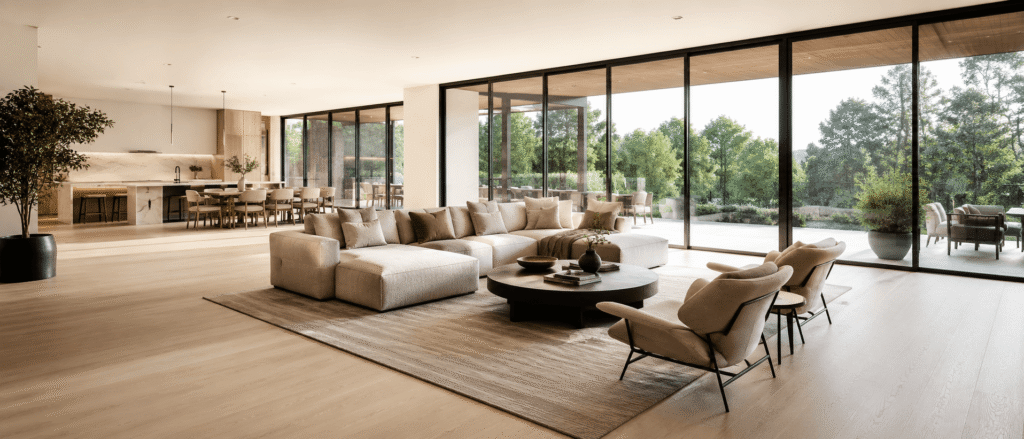
Rooms stay more even in temperature, which usually means fewer comfort complaints. Less condensation on interior glass means less risk of mold nearby, and fewer callbacks. And since most low-e coatings block 90% to 95% of UV, your furniture and flooring fade a lot more slowly — UV is responsible for roughly half of all interior fading from sunlight.
One thing worth knowing up front: low-e coating, on its own, does very little for sound. If you’re near a busy road, you’ll want laminated glass on at least one pane of the IGU in addition to the low-e coating. They solve two completely different problems.
The Honest Drawbacks
Most marketing skips this part. We won’t.
Soft-coat low-e, especially the multi-silver versions, can introduce a faint gray, blue, or green tint. It isn’t a defect. It’s just the optical reality of putting a thin metal layer on glass.
It’s still worth viewing a full-size sample before a large order, though — that tint reads very differently at scale than it does on a small swatch.
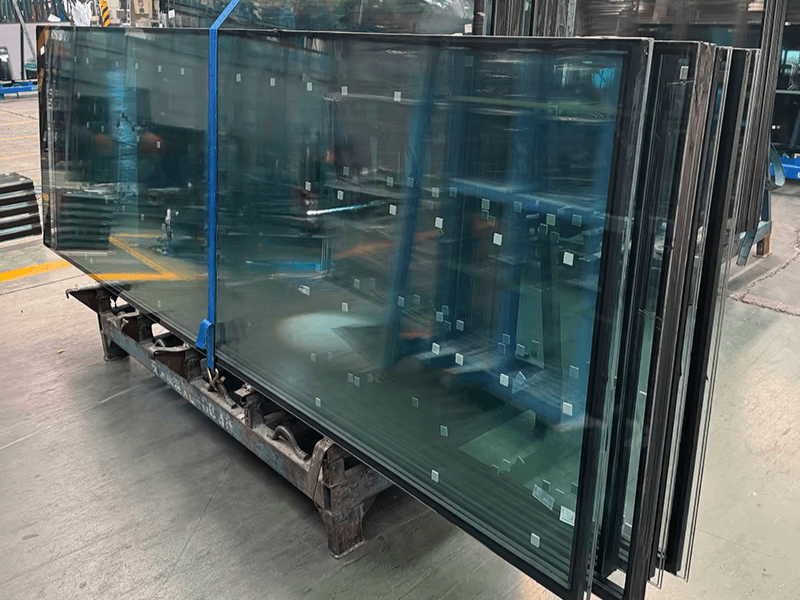
The cost premium is real too. DOE puts it at 10% to 15% over standard glass, and soft coat can run higher depending on the silver count. The savings recover that cost over time, but the exact payback depends on your climate, orientation, and local rates — it’s worth running your own numbers rather than trusting a blanket figure.
And soft coat genuinely cannot be exposed to open air or moisture before it’s sealed inside an IGU. Left exposed, it oxidizes and degrades. That’s also why soft-coat glass can’t be re-cut once it’s made, unlike hard coat.
The Risk Almost Nobody Mentions
Here’s something the marketing material leaves out entirely.
The low-e coating itself doesn’t fail. Once it’s sealed inside an IGU, it’s permanent. What can fail is the IGU around it.
Over 10 to 20 years, depending on manufacturer quality and installation, the seal can break down. Moisture works in, the gas fill leaks out, and the space between the panes fogs up.
When that happens, the coating is still perfectly fine. But the energy performance of the whole unit drops, and you’ll usually need to replace the entire IGU, not just the glass.
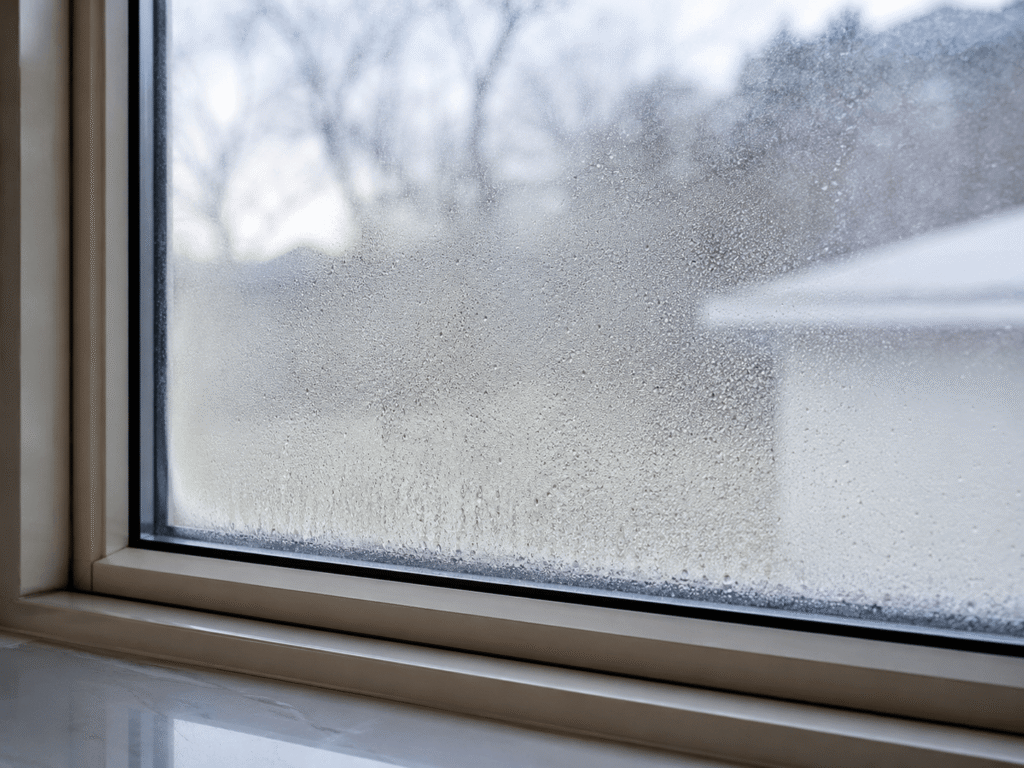
A few things genuinely help here. Choose a premium IGU manufacturer with a 10- to 20-year warranty, rather than the cheapest quote on the table. Ask whether they use a warm-edge spacer, which reduces stress right where failure usually starts. Confirm the sealant type — silicone or polyisobutylene-based systems outlast butyl-only construction.
And when the units arrive, actually inspect them before installation. Look for spacer deformation, gaps in the sealant, or any early condensation between the panes.
The premium for a properly built IGU is one of the better-spent dollars on any glass project. You’re buying 20 years of fog-free performance instead of 5.
That covers what you get and what to watch for. The last piece is pulling it all together into one decision for your actual project.
Putting It All Together
If it helps, here’s roughly the sequence we walk through internally whenever a customer sends us their project.
Start with your climate zone. That one answer settles your coating family — passive, solar control, or mixed.
From there, match it to your building type. Residential windows usually default to soft coat in a double-pane IGU with argon fill, with a Surface 4 coating added for very cold climates. Commercial curtain walls usually call for soft-coat triple-silver. Skylights and roof glazing almost always want solar control, no matter the overall building climate, simply because they take direct overhead sun.
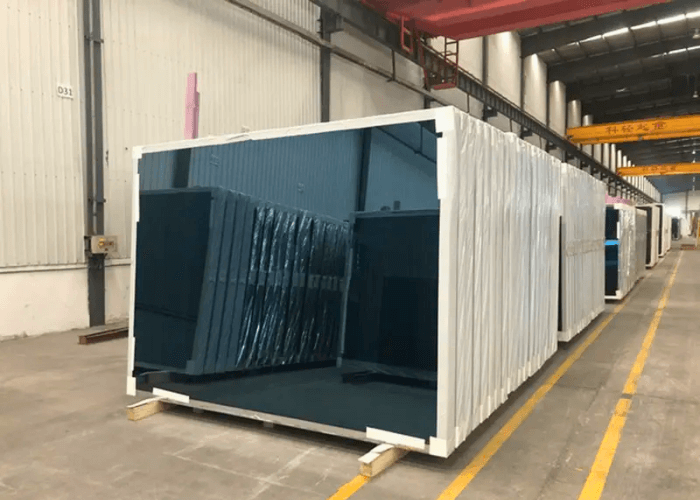
Then think about orientation. Using one coating across every facade wastes performance — many serious projects spec differently for south- and west-facing glass than for north-facing glass on the same building.
Decide what actually matters most to you. Insulation, daylight, solar rejection, color neutrality — these pull in different directions, and there’s no single right answer except the one that fits what your project actually needs.
And finally, before you place the order, run through those five verification questions with your supplier. It takes five minutes and it tells you almost everything.
Where to Go From Here
Low-e glass is genuinely one of the more cost-effective upgrades you can make to any glazed building. A 30% to 50% cut in window-related energy loss, payback often inside five years, and 90% to 95% of UV blocked along the way.
But the coating that actually delivers those numbers has to match your climate, your IGU build, and the real-world realities of fabrication and installation — not just the nicest-sounding label on a spec sheet.
If you’d rather skip the spreadsheet work, send us your project location, panel sizes, and target U-value and SHGC. We’ll come back with a product recommendation and pricing within one business day.