The Quick Answer
Acid etched glass is the better choice when you want a uniform, low-maintenance finish that stays consistent over time — bathrooms, offices, façades, partitions.
Sandblasted glass is the better choice when you want custom patterns, decorative impact, or a tighter budget — signage, feature walls, branded interiors. Everything below explains why, and helps you confirm the call before you order.
What Is the Difference Between Acid Etched and Sandblasted Glass?
You searched for “frosted glass” and got three names that all look identical in photos. Acid etched, sandblasted, frosted. They seem like the same product with different labels.
They come from two completely different processes, and once they are on the wall they age differently, clean differently, and cost differently. Pick the wrong one and you will notice it — sometimes within months. So if you are deciding between them for a real project, the goal of this guide is simple: help you make the right call and feel confident about it.
How Acid Etched and Sandblasted Glass Are Made
You do not need to know the chemistry to choose. But a quick mental model of how each finish is made will save you from misreading samples later.
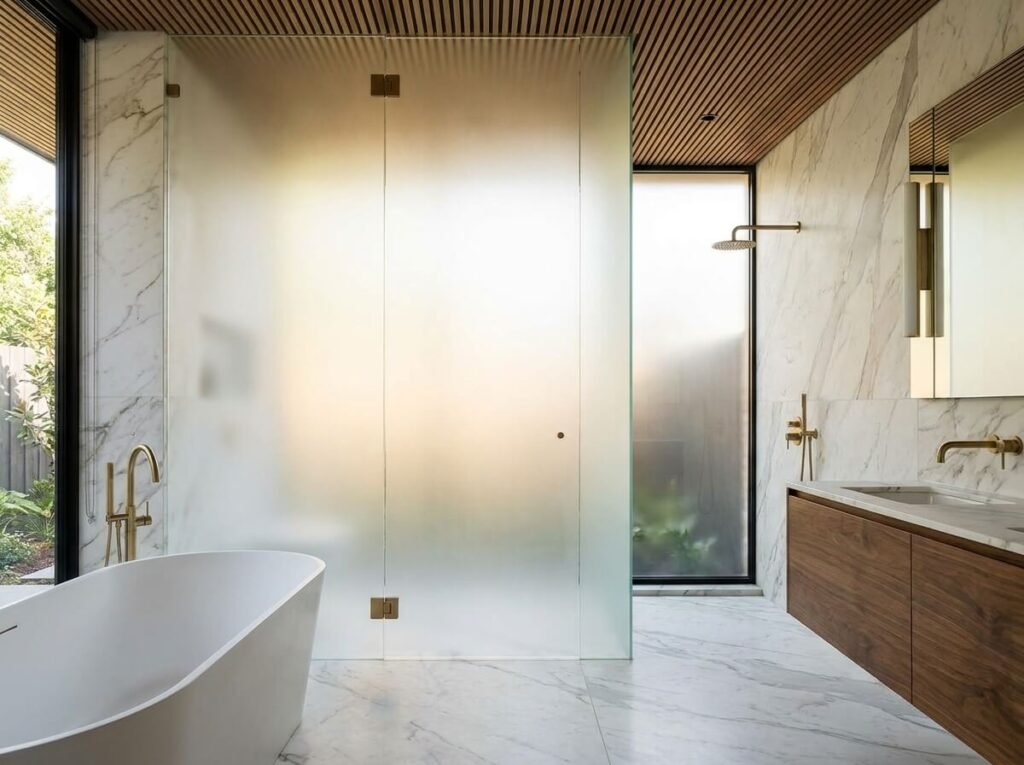
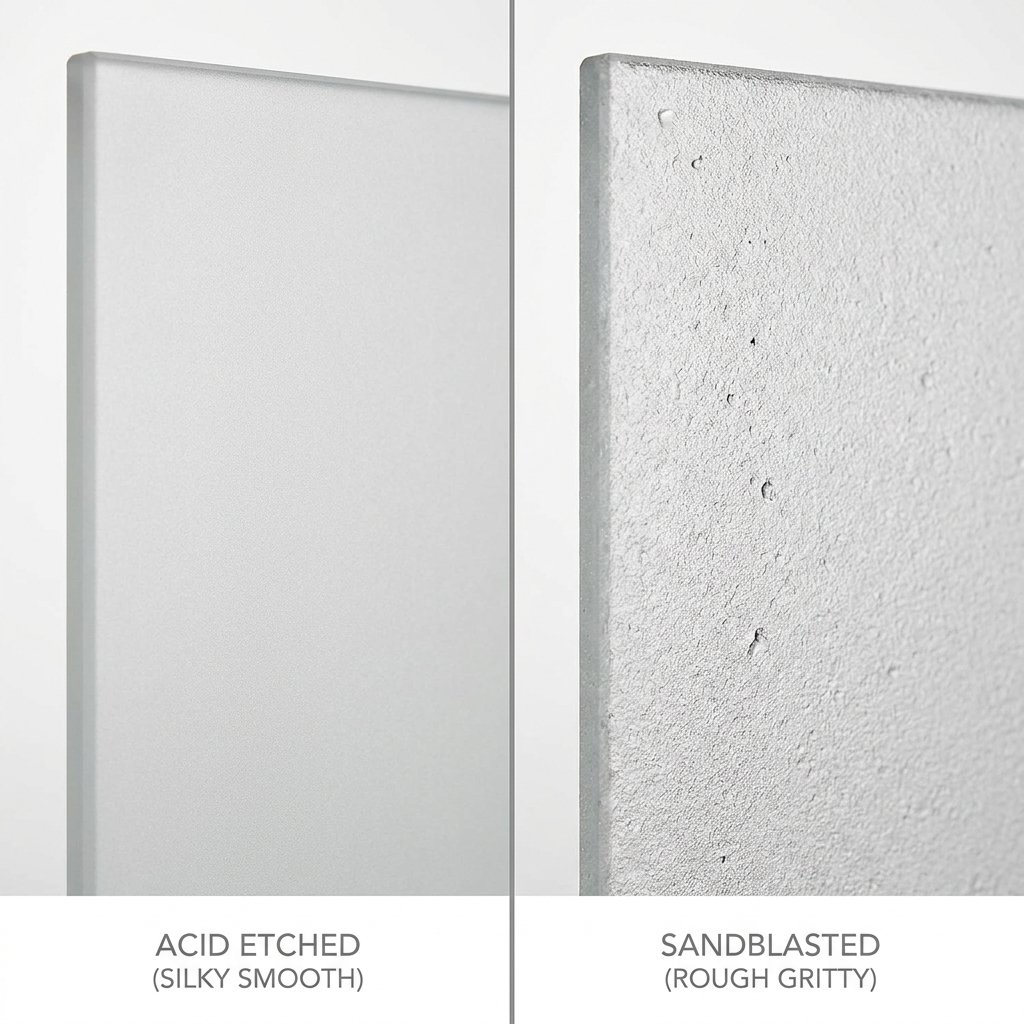
Acid etched glass is frosted by chemistry. A mask protects the areas you want clear, then acid (typically hydrofluoric-based) is applied to the exposed surface. The acid dissolves a microscopically thin layer of the glass, leaving an even, silky matte texture. Light scatters uniformly across the panel — that is what gives it the soft, glowy look.
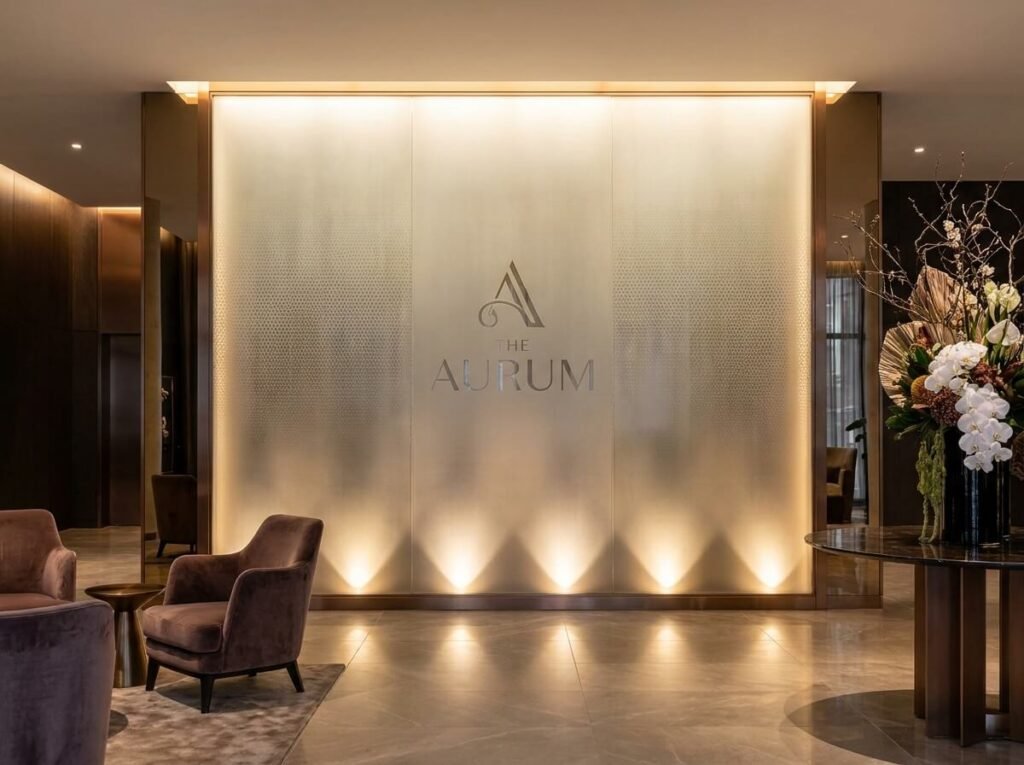
Sandblasted glass is frosted by impact. Fine particles (sand, aluminum oxide, or glass beads) are blasted at the surface through a nozzle, physically chipping it. The rougher, more porous texture is why it traps dirt more easily in high-touch areas — but also why it can carry precise patterns, logos, and gradients with ease.
That is the whole difference in two sentences. Now the practical part.
Acid Etched vs Sandblasted Glass: Full Comparison
Read across the row that matters most to you — that usually tells you everything you need.
| Feature | Acid Etched Glass | Sandblasted Glass |
| Surface texture | Smooth, silky, uniform | Rougher, slightly gritty |
| Light diffusion | Even, soft glow | Cloudy, can be directional |
| Pattern options | Mostly uniform finish; custom patterns need extra masking | Easy to add logos, patterns, gradients |
| Durability of finish | High — chemically bonded to the glass | Medium — can wear in high-touch areas |
| Fingerprint visibility | Low | Higher, especially on darker glass |
| Cleaning ease | Easy, low maintenance | Needs more frequent cleaning |
| Stain resistance | High | Lower — pores trap residue |
| Typical cost | Higher (chemical process, slower) | Lower (mechanical, faster) |
| Lead time | 2–4 weeks for custom orders | 1–2 weeks typical |
| Best for | Partitions, shower doors, façades, premium interiors | Signage, decorative panels, custom art glass |
The decision shortcut: if your project values consistency, longevity, and easy maintenance, choose acid etched. If it values custom design, decorative impact, or budget, choose sandblasted.
If you are still torn after reading this far, ask your supplier for a small sample of each — hold them, smudge them, wipe them. A five-minute test in your hand often beats an hour of reading specs.
Use Cases By Application
Knowing the two finishes are different is one thing. Knowing which one fits your specific project is what actually matters.
Most people searching for frosted glass already have a use case in mind — a bathroom, a wall, a sign, a façade — so the fastest way to make a confident call is to find your situation below and read the recommendation.
Both lists cover the most common scenarios; if yours is not on either list, the reasoning still applies.
Where Acid Etched Glass Is Usually The Right Call
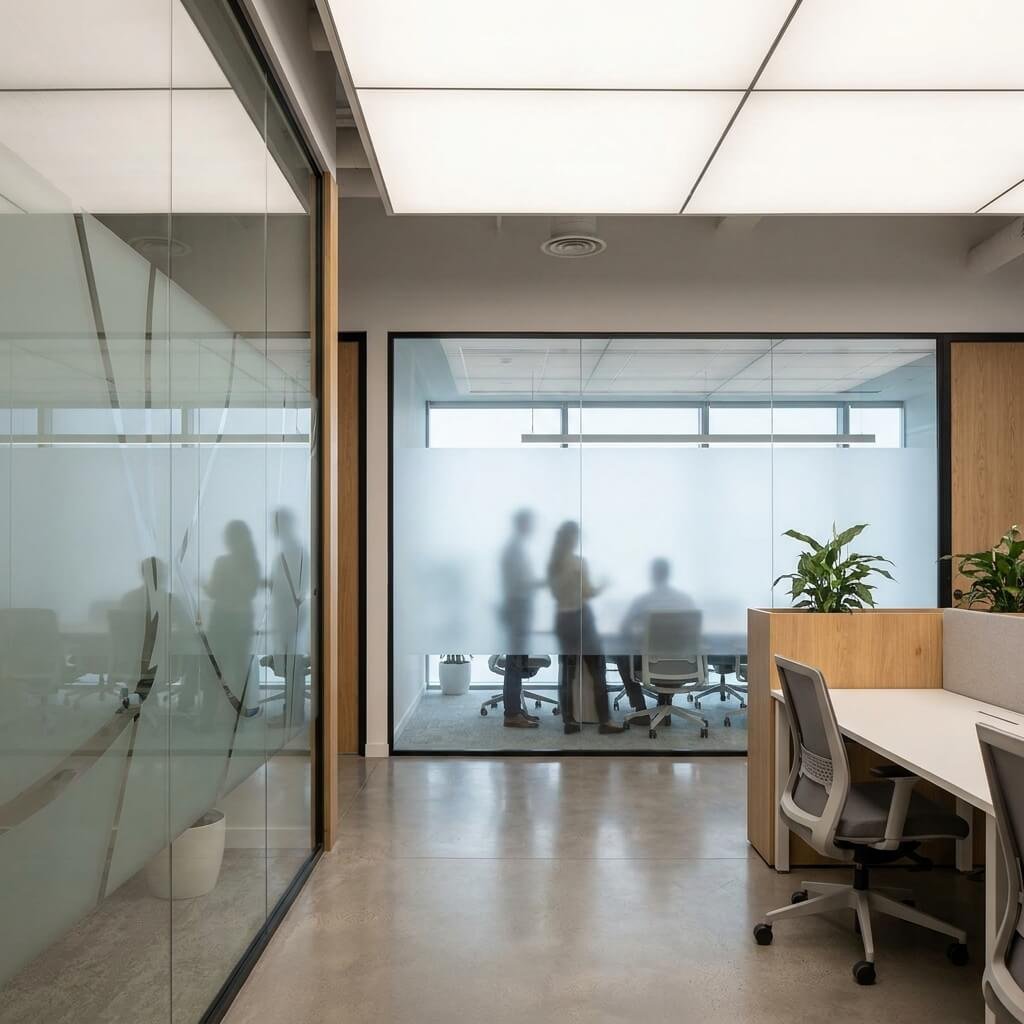
It is the right pick when the finish needs to look the same 5 years from now as the day it was installed.
Bathrooms and shower enclosures stay cleaner between wipes because the smooth surface does not trap soap scum. Office partitions and conference room glass keep their even diffusion, so people on the other side appear as soft silhouettes rather than blurry shapes.
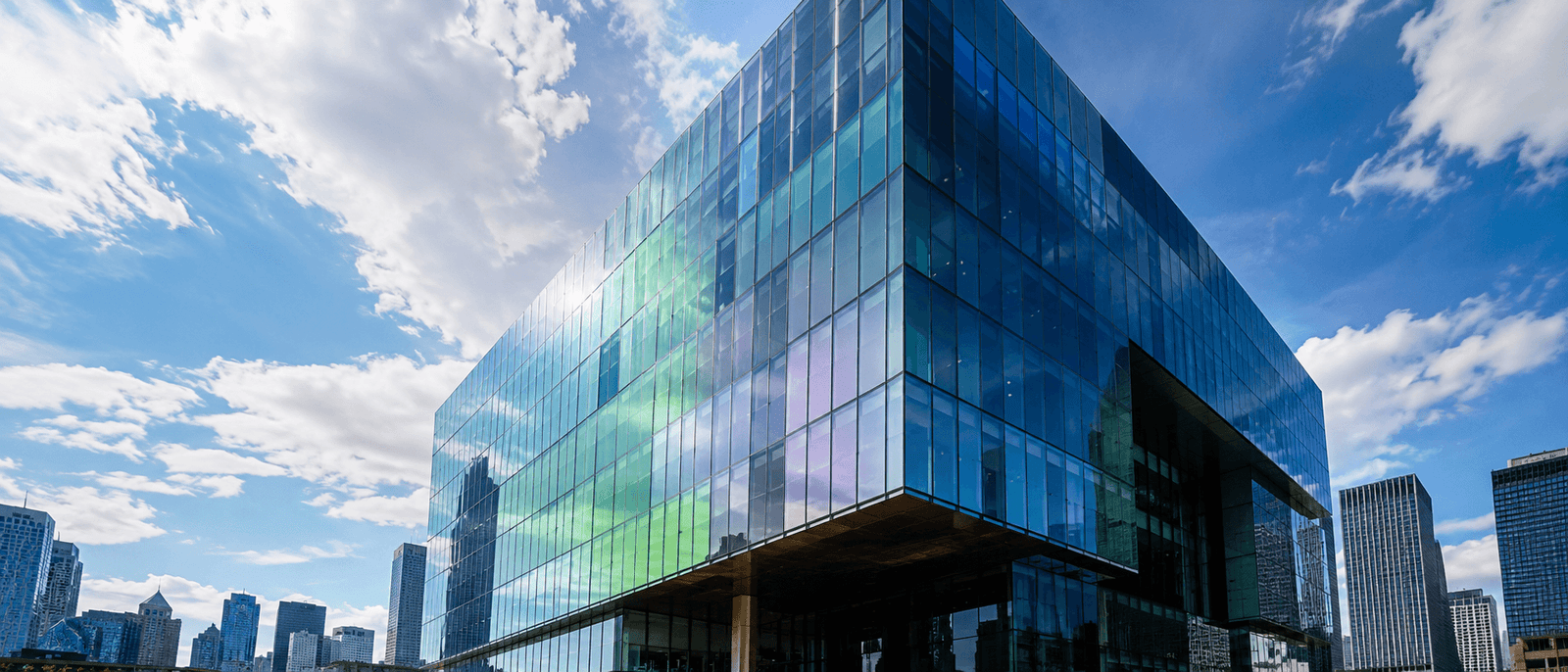
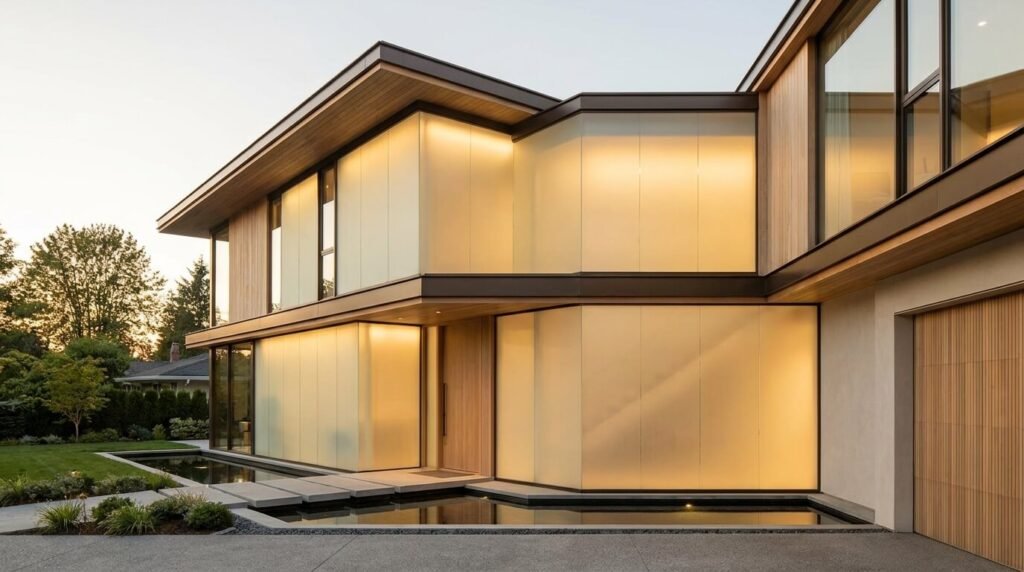
Façades and balustrades in premium residential or hospitality projects get consistent light transmission across the entire panel, which makes the whole building feel calm rather than busy.
If your priority is “I want it to age well and stay easy to live with,” acid etched is almost always the safer bet.
These are applications where uniformity, easy maintenance, and long-term appearance matter more than decorative flexibility.
- Bathroom shower enclosures. The smooth surface does not trap soap scum the way sandblasted does, so the glass stays cleaner between wipes. Most homeowners who switch from sandblasted to acid etched in showers say the difference shows up within the first month.
- Bathroom privacy windows. The diffusion is even, which flatters skin tones and reads as calm and premium rather than cloudy.
- Office partitions and conference room glass. Consistent light diffusion keeps people on the other side as soft silhouettes, not blurry shapes. Fingerprint visibility on door handles and touch points stays low.
- Residential balustrades and railings. Large panels stay uniform across the full run, and the finish ages well with almost no maintenance.
- Premium residential façades. Light transmission stays consistent across every panel, so the building reads as considered rather than busy over time.
- Commercial building façades. Easier to keep a clean, uniform appearance at scale — important when you have dozens or hundreds of panels on one elevation.
Where Sandblasted Glass Is Usually The Right Call
It dominates anywhere the glass itself is part of the visual story.
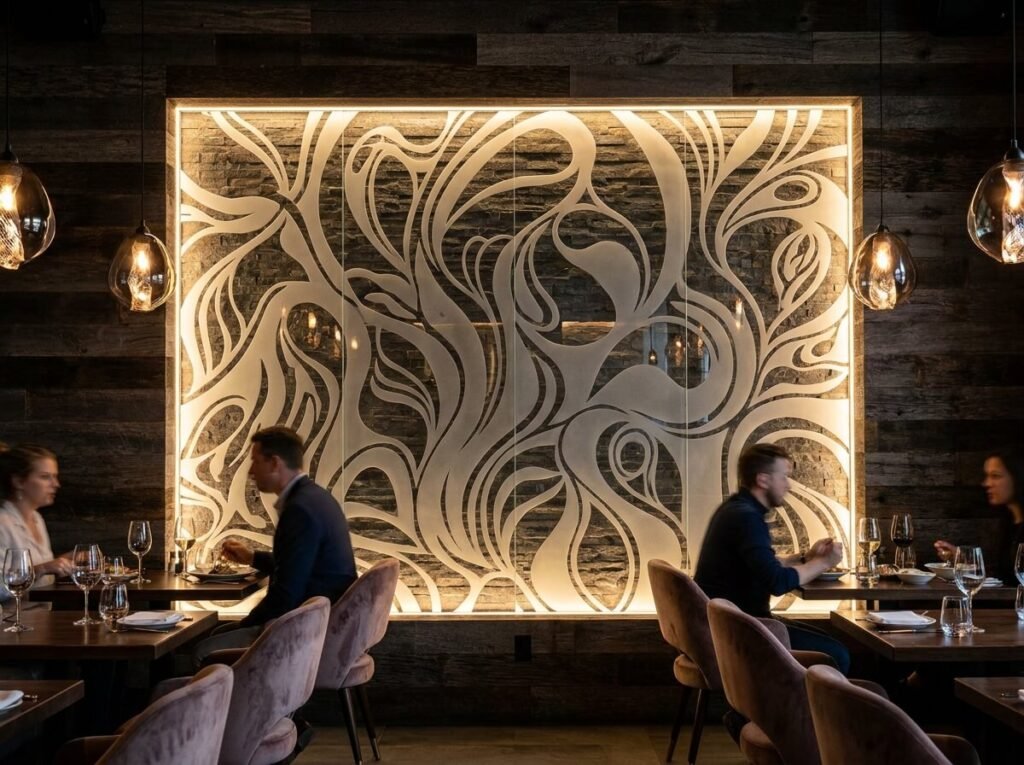
Custom logos on lobby walls. Gradient designs in hotel corridors. House numbers on a front door panel. Feature walls in restaurants. Branded signage in retail. Anywhere the design is the point — not just the privacy — sandblasting gives you control that acid etching cannot match at a reasonable cost.
It is also the more budget-friendly option. The equipment and process are simpler, the lead times are shorter, and that saving usually reaches the buyer.
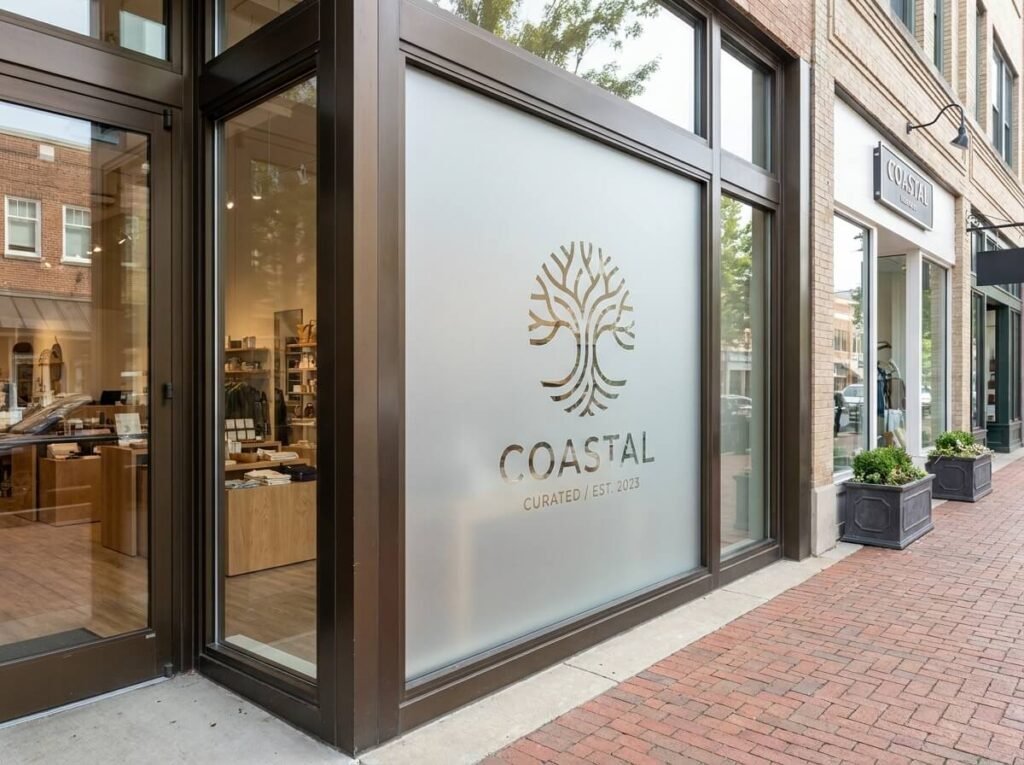
These are applications where the glass itself is part of the design, or where budget and lead time are tighter.
- Hotel lobby and corridor glass. Custom patterns and gradients carry the brand identity and visual rhythm these spaces depend on. Acid etched cannot do this without significant extra masking.
- Restaurant feature walls. The glass becomes a design element rather than a backdrop. Sandblasting gives you depth, gradients, and texture that acid etching cannot replicate at a sensible cost.
- Retail storefront and signage. Logos, gradients, and patterns are faster and cheaper to execute. For brand-driven retail environments, sandblasted is almost always the default.
- House numbers, room signs, and wayfinding. Precise text and small icons work cleanly at small scale. Quick to produce, inexpensive, and easy to refresh if branding changes.
- Decorative art panels and custom installations. Gradients, layered depth, line work, and bespoke designs are where sandblasting genuinely shines. If the glass is meant to be noticed, this is usually the right route.
A Quick Way To Decide If Your Scenario Is Not Listed
If your application does not match any of the above, ask yourself two questions.
Is the glass primarily functional — privacy, light diffusion, easy maintenance over years? If yes, choose acid etched.
Is the glass primarily a design feature — patterns, brand identity, visual impact? If yes, choose sandblasted. That single split resolves most edge cases without further research.
Acid Etched vs Sandblasted: Pros and Cons
Acid etched glass costs more and takes longer to produce. The chemical process requires careful handling, proper ventilation, and skilled operators. For custom orders, expect 2–4 weeks compared to 1–2 weeks for sandblasted. If you are on a tight schedule and tight budget, that gap matters.
Sandblasted glass needs more cleaning. In humid or high-touch environments, the surface can start to look slightly grimy within months. A quick wipe with a microfiber cloth keeps it fresh, but if low maintenance is a priority for the end user, raise it before the order is placed.
Acid etched glass is harder to repair. If a panel is scratched or damaged, fixes are not straightforward. Sandblasted panels can sometimes be re-blasted to refresh the surface, though color matching is not always perfect.
Neither finish should be exposed to harsh abrasives — scouring pads, acidic cleaners, or anything gritty will damage both. A soft cloth and a mild glass cleaner is all either surface really needs.
Common Mistakes When Buying Frosted Glass
The single biggest mistake people make with both finishes is judging them by a small sample.
A 100mm × 100mm swatch almost always looks flawless. The texture reads as uniform, the diffusion looks even, the color looks consistent. Then the same finish goes up on a full-height shower wall or a 3-meter façade panel, and suddenly you can see streaks, edge falloff, or subtle banding where the acid or blast pattern shifted across a larger surface.
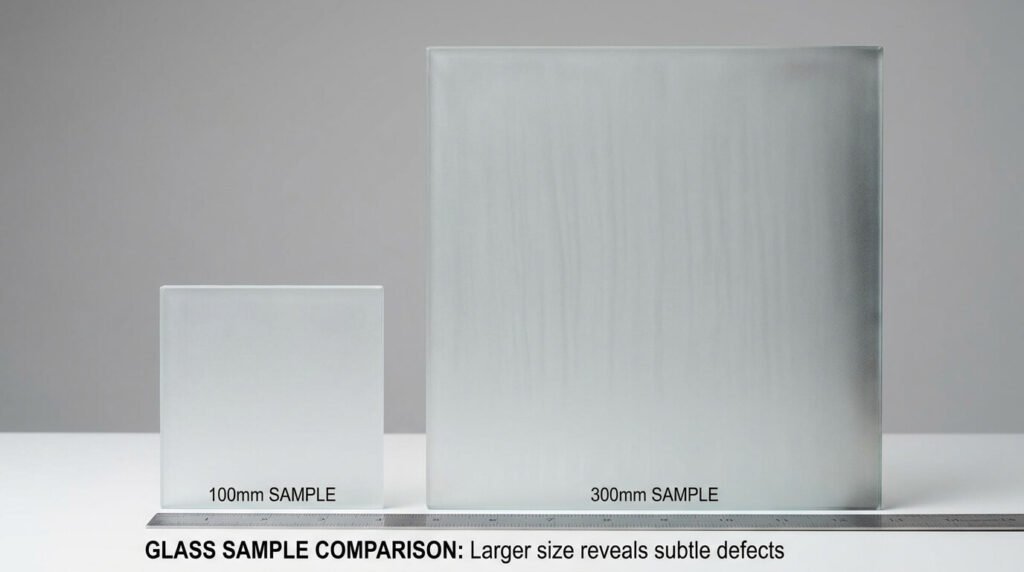
What to do instead: ask your supplier for a sample at least 300mm × 300mm, view it under the actual lighting conditions of the room where it will be installed, and check the edges carefully. If you cannot get a sample that large, at minimum ask for project photos of the same finish in a comparable application — and ask the supplier directly whether the finish is consistent across full panels or only in small zones.
A few extra minutes of due diligence here will save you from a costly re-order later.
FAQ: Acid Etched vs Sandblasted Glass
Is acid etched glass more expensive than sandblasted glass?
Yes. Acid etched glass typically runs higher because of the chemical process, the controlled handling it requires, and longer lead times. For non-custom orders the gap is usually modest; for custom patterns and large panels, expect the price difference to widen noticeably.
Which is better for shower doors — acid etched or sandblasted?
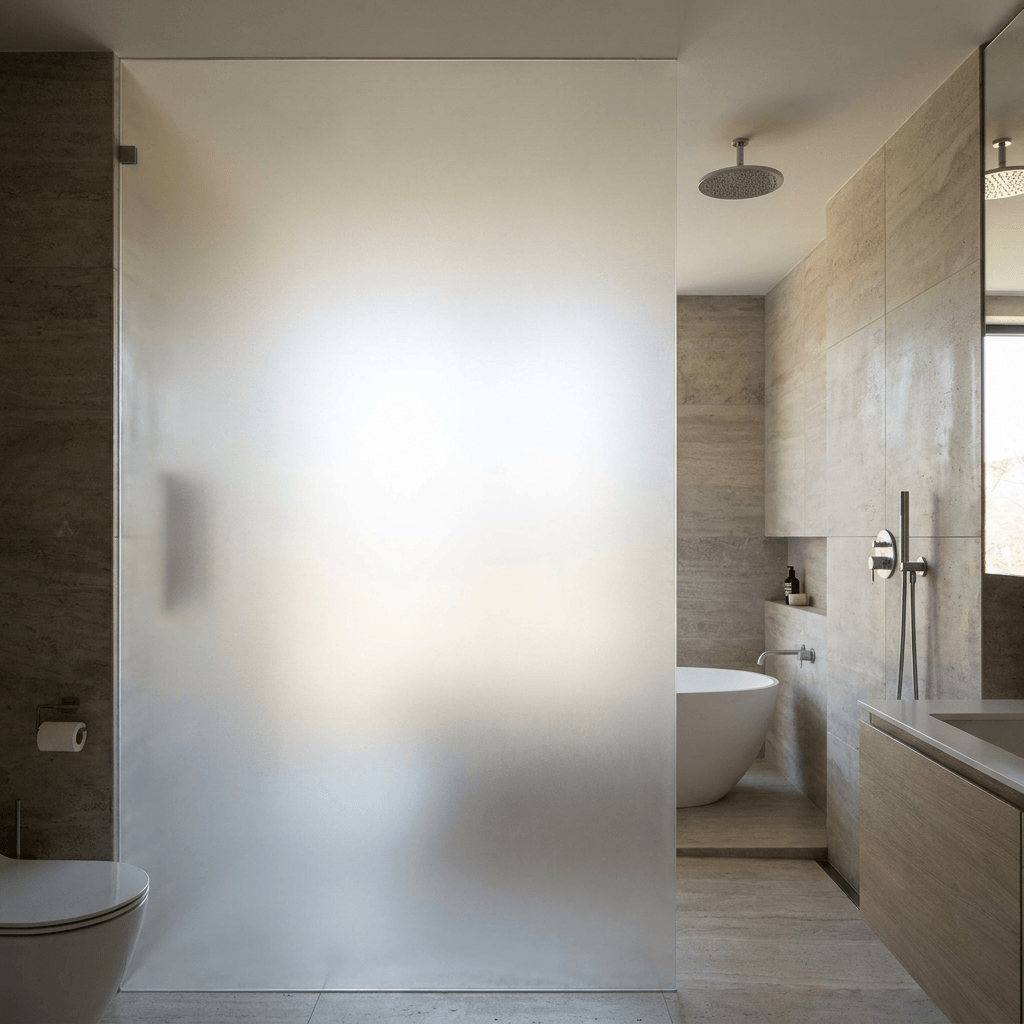
Acid etched is the stronger pick for shower doors. The smooth surface resists soap scum and hard-water marks better than the porous sandblasted finish, which means easier cleaning and a cleaner look between wipes. Sandblasted works for showers too, but plan on more frequent cleaning.
Does sandblasted glass show fingerprints?
More than acid etched, especially on darker glass. The rougher surface scatters hand oils across a wider area, making smudges visible at certain angles. Acid etched hides fingerprints much better because its surface texture is more uniform.
Can acid etched glass be used outdoors?
Yes. Acid etched glass holds up well in exterior applications such as façades, balcony railings, and balustrades because the finish is chemically bonded to the glass and will not peel or wear off. Sandblasted glass can also be used outdoors, but expect it to need more frequent cleaning in exposed or dusty environments.
How long does each finish last?
Both are permanent finishes — they are part of the glass itself, not a coating. Properly maintained, either finish will last the full service life of the panel. The practical difference is appearance over time: acid etched tends to look closer to new for longer, while sandblasted may need more frequent cleaning to stay looking fresh.
Can you paint or print over acid etched or sandblasted glass?
Both surfaces accept paint, ceramic frit, and digital print well — the matte texture actually helps ink and frit adhere. Acid etched gives a more uniform background for printing; sandblasted gives a slightly more textured background that some designers prefer for artistic effects.
Conclusion
Acid etched and sandblasted glass look similar at first glance, but the way they are made, the way they age, and the way they perform are genuinely different. The right choice depends on your specific project, your timeline, your budget, and the people who will live with the glass every day.
If you want a quote for acid etched or sandblasted glass for your project, send us your panel sizes, quantities, and application. We will come back to you within one business day with pricing, lead time, and a sample recommendation.
Pick the glass that fits your project — not the one that just looks nice in a photo.