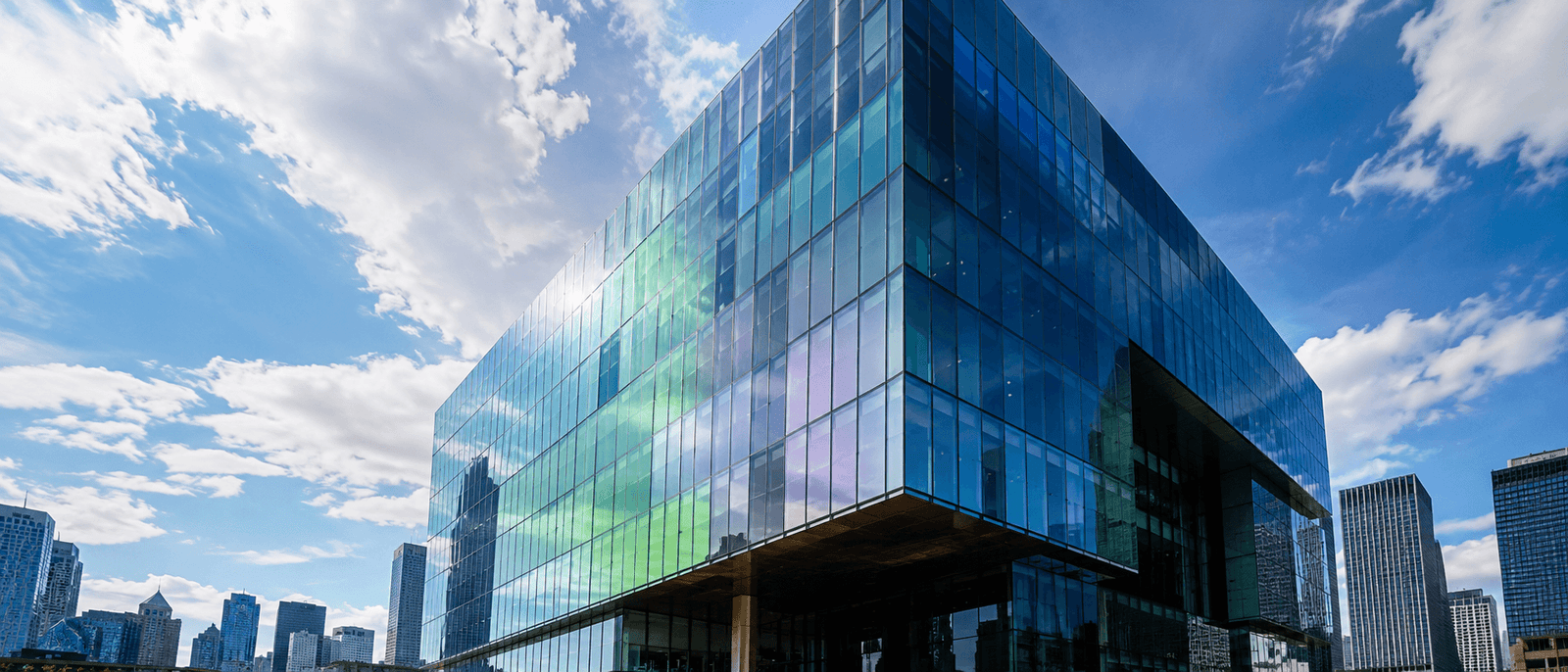
What Is Architectural Glass?
Walk into any modern office building. Look up — glass curtain wall. Look down — glass handrails. Open a window — there’s the glass, and its frame.
All of it is architectural glass.
These are glass materials used in buildings, primarily as transparent envelope structures. But their function goes well beyond letting in light.
Glass can bear structural load. It can be the core of thermal insulation. It can save lives during a fire. And it can make or break a building’s entire aesthetic.
The point is: understanding architectural glass is not about memorizing names and specs. It is about understanding the physical properties behind each type — and the logic for where each one belongs.
7 Types of Architectural Glass Explained
Annealed Glass
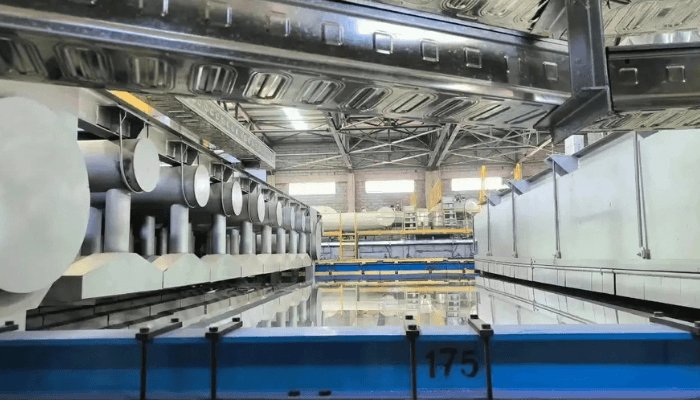
Annealed glass — the base material for all processed glass
Annealed glass is where everything starts.
Glass comes off the float line in its most basic form. It then passes through an annealing furnace — cooled precisely to relieve internal stress. Only then is it ready to cut and work with.
The upsides are real. It is cheap. Highly adaptable. And it transmits up to 88% of visible light, making spaces bright and welcoming.
But the problems are serious too. It is weak. And when it breaks, it shatters into sharp, jagged shards — a genuine safety hazard.
Building codes restrict its use for this reason. It can only appear in low-rise buildings where falling glass poses no threat. Or inside, for non-structural partitions. The moment safety is a concern, annealed glass is not the answer.
Tempered / Toughened Glass

Tempered glass is the workhorse of safety glass in architecture.
Here is how it works. Annealed glass is reheated to around 650°C. Then high-pressure cold air cools it fast — just seconds. The surface hardens before the interior, creating a compressive stress pattern throughout the glass. That is the secret behind its strength.
It is typically 4 to 5 times stronger than annealed glass. And when it breaks, it fractures into small, dull granules instead of razor-sharp shards — far less likely to cause injury.
Building codes require safety glass in high-rise construction. In most cases, tempered is the baseline.
One thing is easy to miss: you cannot work tempered glass after it is tempered. Cut it or drill it, and the stress balance is gone. The whole panel shatters on the spot.
All hole positions, slots, and edge profiles must be locked in during design. Once cut, there is no going back. This causes more rework and wasted budget than people expect.
Heat-Strengthened Glass
Heat-strengthened glass sits between annealed and fully tempered.
The cooling is slower. The compressive stress is about half that of tempered glass. And when it breaks, fragments behave more like annealed glass — no small granules. This means heat-strengthened is not classified as a safety glass. It cannot be used alone in any fall-risk application.
Its actual use is quite specialized. It typically appears as the outer or inner lite of a curtain wall, working alongside other panels. The goal is to control overall bending of the wall glass and prevent thermal stress from cracking the outer pane.
If you are working on a large-area curtain wall, asking “what glass is on the outer lite?” tells you a lot about whether the design is up to standard.
Laminated Glass
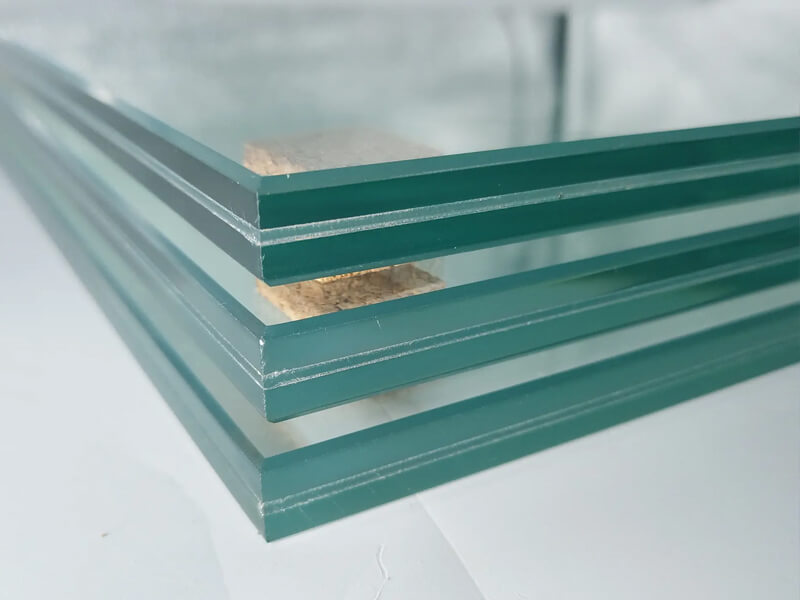
Of all safety glass types, laminated offers the most complete protection.
It is made from two or more panes, bonded together with a PVB (polyvinyl butyral) or SGP (SentryGlas Plus) interlayer, under high heat and pressure. Two panes plus one interlayer — two lines of defense.
The first is the interlayer’s bond strength, which absorbs a large amount of impact energy. The second: even if the glass cracks, fragments are held firmly in place. They will not fall under gravity.
This makes laminated glass irreplaceable in any fall-risk application. Skylights. Glass railings. Sunroom roofs. Covered walkways. In all of these places, it is the only code-compliant option.
Laminated glass has two more benefits that are often underestimated. The PVB interlayer blocks more than 99% of ultraviolet rays — furniture, fabrics, artwork inside stay protected from fading. At the same time, the interlayer dampens sound waves, and this effect stacks when combined with an insulating unit.
Inspection tip: shine a flashlight at the glass from the side. Look for bubbles, impurities, or delamination. A properly made laminated pane looks perfectly clear from every angle.
Insulating Glass Units (IGU)
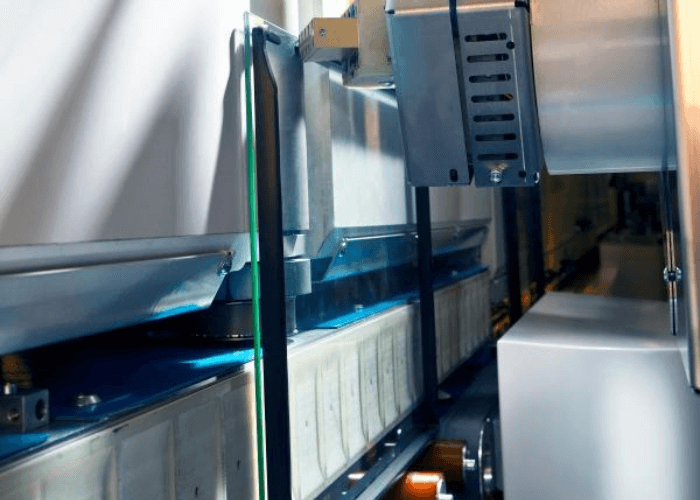
Insulating Glass Unit (IGU) — two panes separated by a sealed gas-filled cavity
An IGU is not a type of glass. It is a construction.
Two or more panes are spaced apart, with a sealed cavity in between, filled with dry air or an inert gas. Argon is most common. Krypton insulates even better, but costs more.
The core function is thermal insulation. A well-specified IGU insulates several times better than a single pane of the same thickness. Less heat lost in winter. Less heat gained in summer. Lower HVAC load. Lower operating costs.
The critical vulnerability: the edge seal. Once the sealant cracks or loses adhesion, moisture works its way in — and the glass fogs up from the inside. Insulation performance drops irreversibly. The only fix is a full replacement.
Low-E Glass
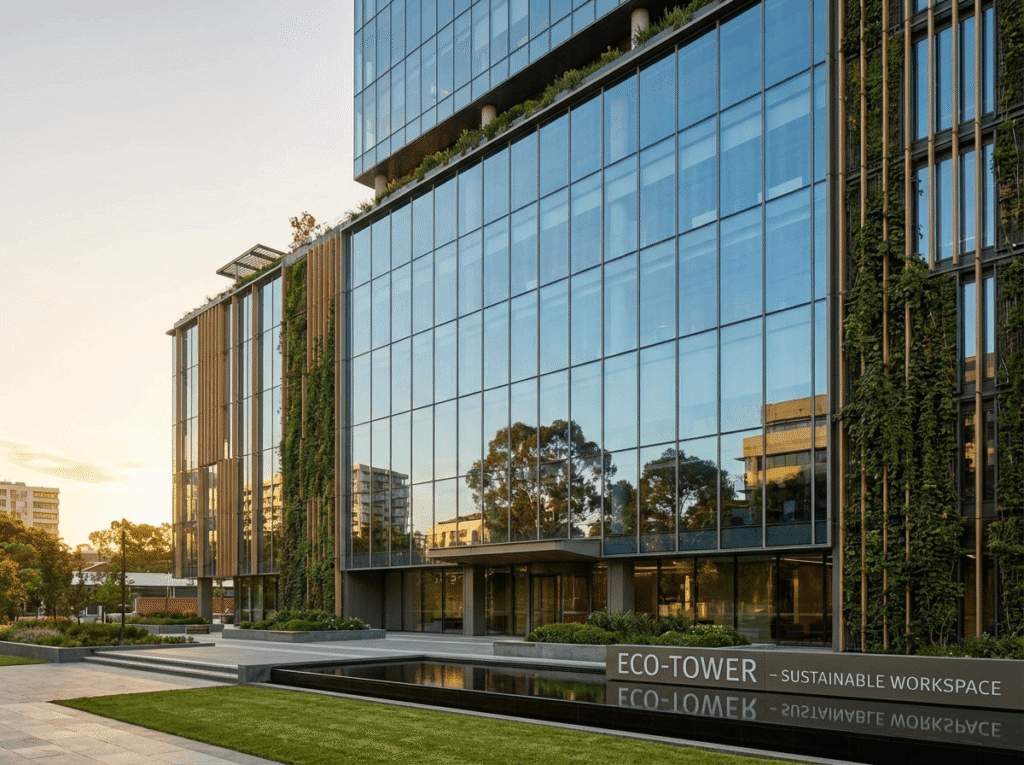
Low-E glass facade — the invisible coating reflects heat while letting light in
Low-E glass has an ultra-thin low-emissivity metal oxide coating on its surface. The coating is essentially invisible to the eye.
What it does: reflects far-infrared thermal radiation. Heat that gets inside stays inside. Solar heat trying to get in gets blocked. Warm in winter, cool in summer. One glass, both problems solved.
Online Low-E is coated directly on the float line. The coating is hard and durable. It can be installed as a single pane. Insulating performance is relatively modest. It suits projects where cost is the primary driver.
Offline Low-E uses vacuum magnetic sputtering. The coating is extremely thin and fragile. It must be used as one lite inside an IGU — never installed on its own. But its insulating performance is outstanding. It is the standard for green buildings and passive houses today.
Low-E pricing varies widely. The core variable is silver layers: single, double, or triple. More silver means better solar control — but lower visible light transmission. When specifying Low-E, do not fixate on the U-value alone. Consider the orientation and daylighting needs of each facade.
Self-Cleaning Glass
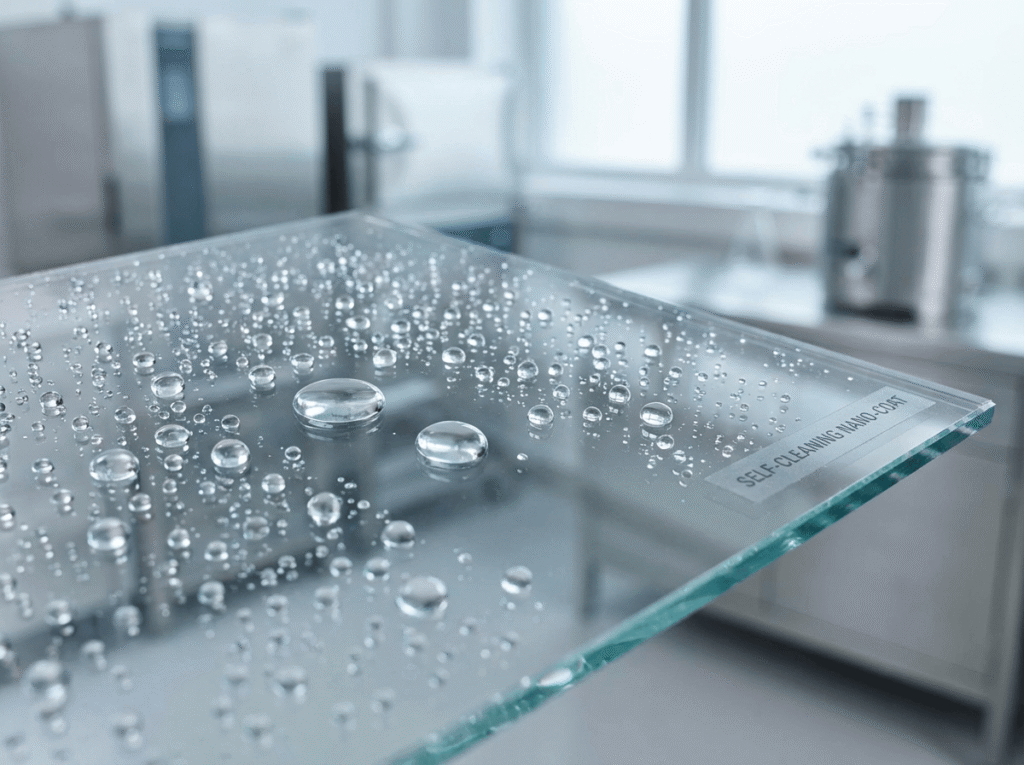
Hydrophilic self-cleaning coating — water spreads evenly and washes away dirt
The concept is straightforward. Glass has a TiO₂ (titanium dioxide) photocatalytic coating. When exposed to UV light, it breaks down organic dirt — so rain washes it away.
In practice, the concept has real limits. The coating needs sufficient UV exposure to work. Installations in cloudy or heavily shaded locations — the effect drops significantly.
The TiO₂ coating also degrades over time. Manufacturer warranties typically run 5 to 10 years. After that, cleaning performance fades gradually. Re-cleaning tall facade glass is expensive.
Self-cleaning glass makes the most sense for tall skylights and roof glazing in sunny, rainy climates, where accessing the glass manually is difficult and costly.
Quick Reference: 7 Types at a Glance
| Glass Type | Safety | Insulation | Soundproofing | Typical Uses | Cost |
|---|---|---|---|---|---|
| Annealed | None — sharp shards | Poor | Poor | Low-rise interior partitions | Low |
| Tempered | High — small granules | Moderate | Moderate | Curtain walls, doors, railings | Medium |
| Heat-Strengthened | Moderate — not a safety glass | Moderate | Moderate | Outer curtain wall lite | Medium |
| Laminated | Very High — fall protection | Moderate | Good | Skylights, railings, sunrooms | Medium-High |
| Insulating IGU | Depends on inner lite | Excellent | Good | Energy-efficient facades | Medium-High |
| Low-E IGU | Depends on inner lite | Excellent | Good | Green buildings, passive houses | High |
| Self-Cleaning | Depends on inner lite | Moderate | Moderate | Tall skylights, hard-to-reach roof | High |
Thermal Performance: The Numbers That Matter
U-value measures insulation. Lower is better. Plain annealed glass sits around 5.8 W/m²K. A well-specified triple-silver krypton-filled Low-E IGU can reach 0.5 W/m²K. The difference is more than tenfold.
SHGC (Solar Heat Gain Coefficient) measures how much solar heat passes through. In hot climates or on west-facing facades, a low SHGC cuts cooling loads significantly. In cold climates, a higher SHGC can be used intentionally to capture passive solar heat.
Rw (Sound Transmission Index) measures soundproofing. For buildings near busy roads or airports, this is a hard constraint. Standard 6mm annealed glass has an Rw of about 31 dB. Laminated glass reaches 38 dB or more. Add a double IGU configuration and you can exceed 40 dB.
Application Scenarios
Curtain Walls and Building Facades
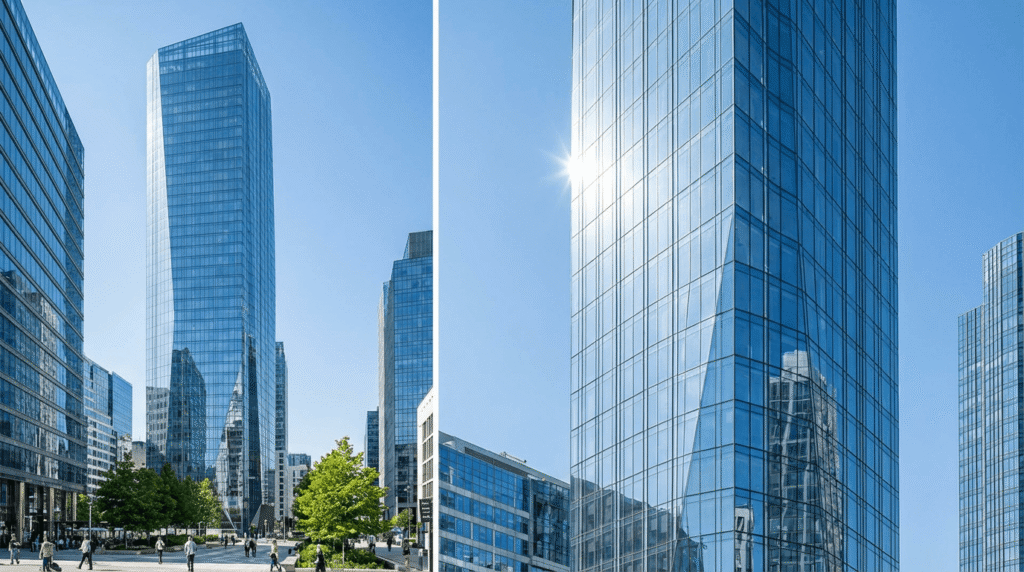
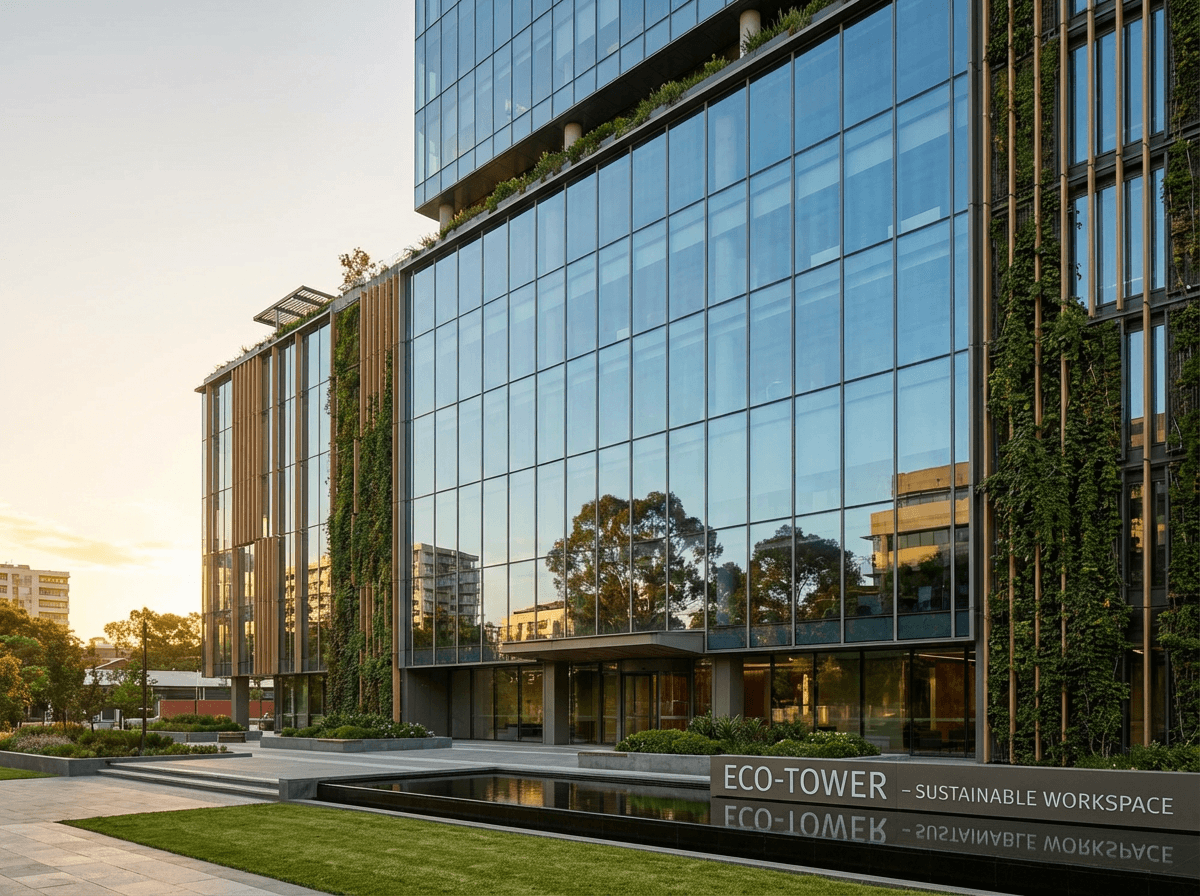
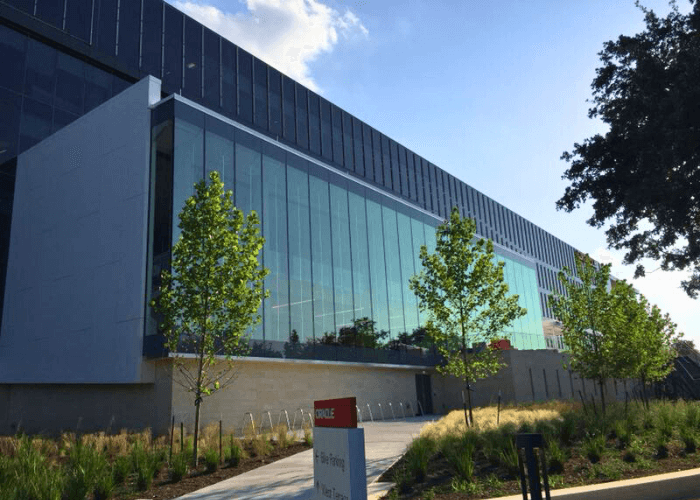
Full-height glass curtain wall — the defining feature of modern commercial architecture
Modern high-rise curtain walls fall into two structural types: framed and point-supported. Large-scale curtain walls typically use tempered laminated IGU — combining safety and insulation in one system.
Interior Glass Partitions
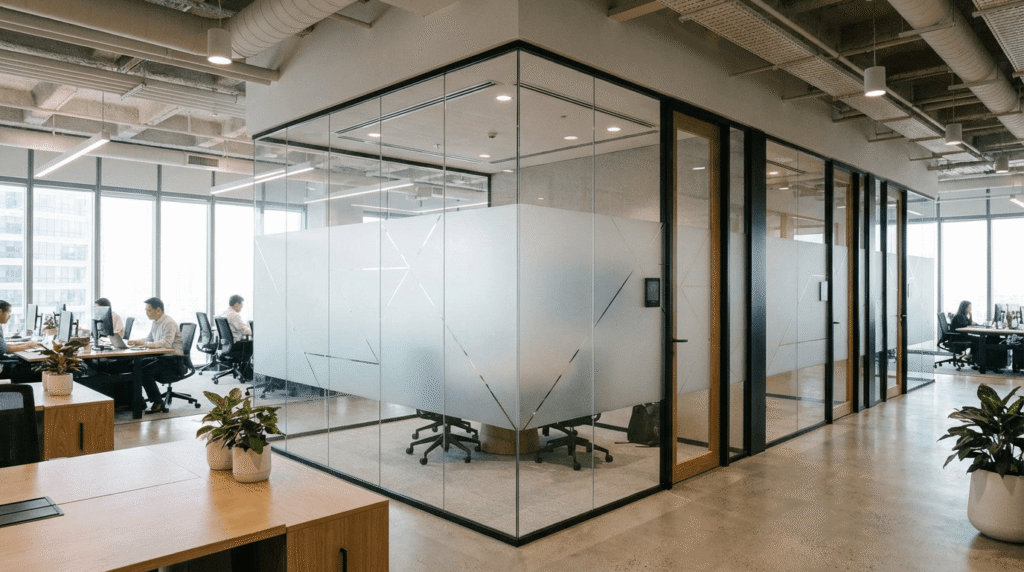
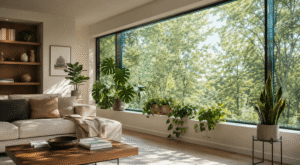
Glass partitions balance openness with functional separation in modern offices
Open-plan design demands transparency with appropriate separation. Tempered glass is the common choice. For privacy, frosted, gradient-printed, or switchable laminated glass works well.
Skylights and Roof Glazing
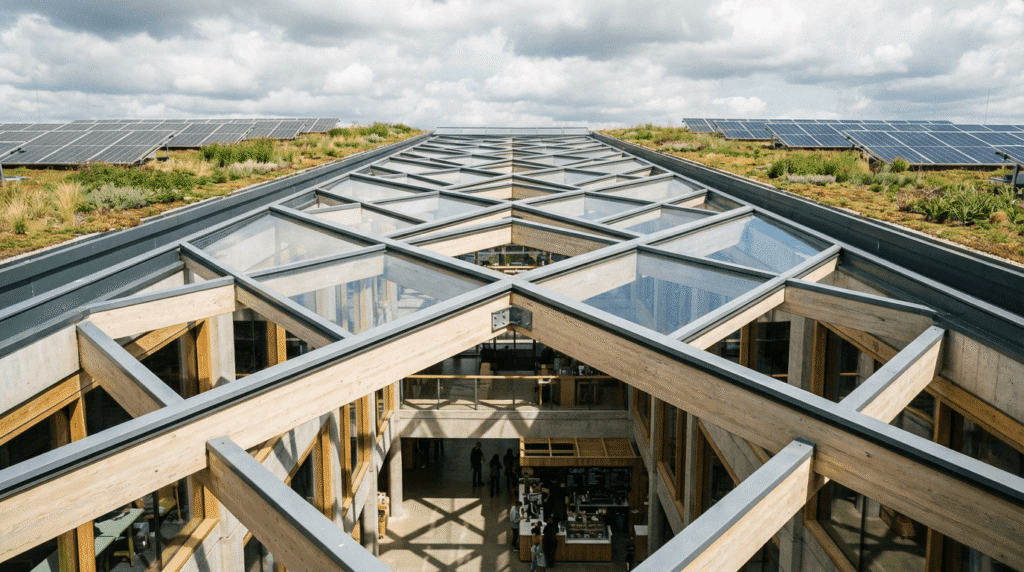
Glass skylights bring natural daylight deep into the building — but safety glass is mandatory here
Because they are sloped or horizontal, broken glass poses a direct fall hazard. Building codes mandate laminated glass here without exception. Design must also address drainage slope and waterproofing details.
Railings and Glass Balustrades
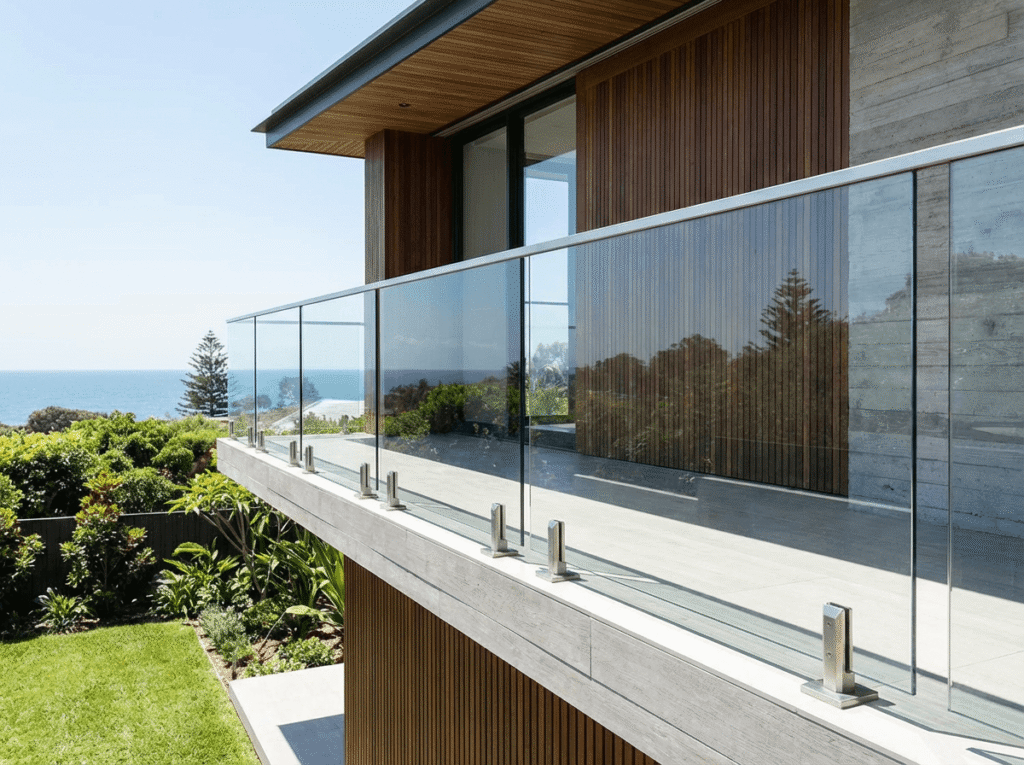
Glass balustrade — clean sightlines with mandatory fall protection requirements
Indoor and balcony railings must be at least 1,050mm tall. Glass must be tempered laminated, typically no less than 12mm thick. On acceptance: verify that laminated glass — not tempered single lite — was actually used.
Selection Logic: Requirements First, Always
| Application | Primary Constraint | Recommended Specification | Key Notes |
|---|---|---|---|
| Curtain wall, 10+ stories | Safety + insulation | Tempered laminated IGU (double-silver Low-E) | Thermal stress analysis required |
| Shopping mall railing | Fall protection | Tempered laminated ≥12mm | Verify laminated marking on site |
| Skylights / roof | Fall safety + insulation | Laminated IGU (argon-filled) | Drainage must be water-tested |
| West facade, strong sun | Solar control | Low-E IGU (triple/double silver) | Works better with exterior shading |
| Street-facing, noisy | Soundproofing | Laminated + double IGU | Do a noise survey first |
| Green building cert | Energy efficiency | Triple-silver krypton Low-E IGU | Select U-value per cert standard |
| Interior partition | Privacy + transparency | Tempered frosted / switchable laminated | Lateral impact resistance must be met |
When budget is tight, prioritize structural safety. Do not skip lamination where codes require it. On supplier vetting: domestically in China, look for CCC mandatory certification. For exports, check CE (EU) or ASTM (US) compliance.
Manufacturing: Know the Process to Spot Bad Suppliers
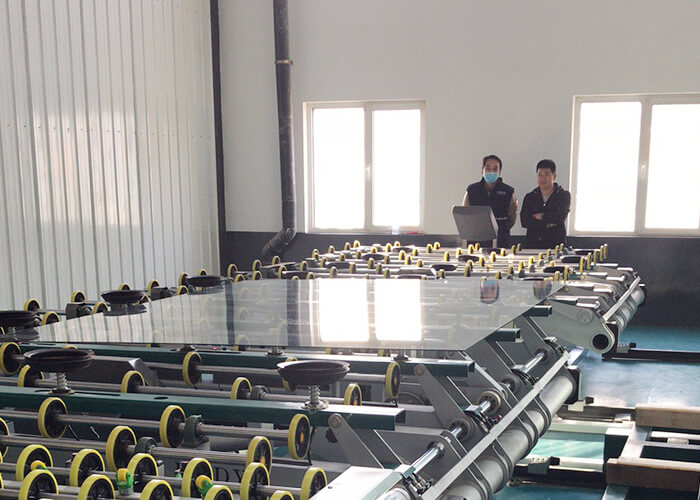
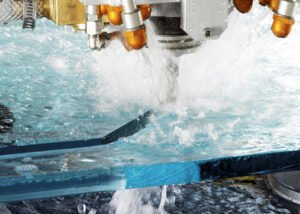
Chinese manufacturing facility — glass quality control on the production line
Float glass — invented in 1959 — remains the dominant method for flat glass production. Raw materials are melted at around 1,500°C, then floated on molten tin. Surface tension produces a flat, uniform ribbon. No polishing needed.
Tempering demands very high precision on cooling uniformity. Uneven cooling introduces higher internal tensile stress, which raises spontaneous breakage risk. When vetting suppliers, the tempering furnace grade matters — a lot.
Laminated glass production requires strict control of autoclave temperature, pressure, and hold time. PVB film thickness and brand directly affect optical performance and long-term durability.
Low-E coating demands the highest precision of all. Film thickness is measured in nanometers. The level of equipment automation and inline quality monitoring is what separates premium from commodity products.
Global Market and Supply Chain in 2026
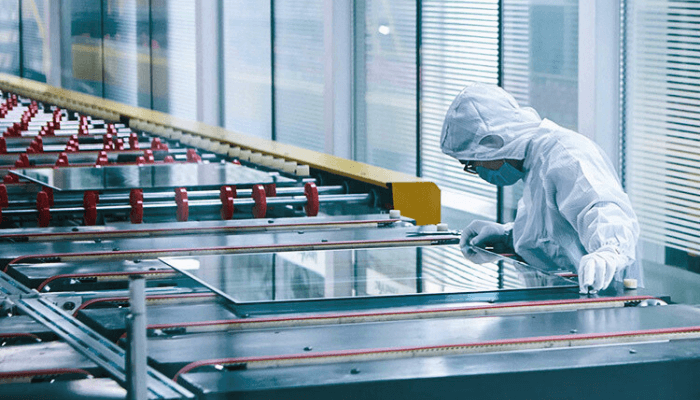
China is the world’s largest producer of architectural glass. Industrial clusters in Shahe (Hebei) and Foshan (Guangdong) cover the full chain from raw sheet to finished products.
In specialized categories — ultra-thick tempered, extra-large panels, and high-end Low-E — European and Japanese manufacturers still hold the technical edge. Internationally, Saint-Gobain, Pilkington (NSG Group), and Guardian are the leading premium brands.
As of 2026: the global Low-E glass market has surpassed USD 30 billion, with a compound annual growth rate above 5%. North America is growing fastest. Energy efficiency and sustainability are the two strongest forces shaping the industry.
2026 Trends: Smart Glass and Building Integration
Electrochromic (Smart Tinting) Glass is moving from concept to practical use. A voltage adjustment changes the glass’s light transmission — users switch between transparent and tinted states. In 2026, as costs have come down, electrochromic glass is appearing in more mid-to-high-end commercial projects.
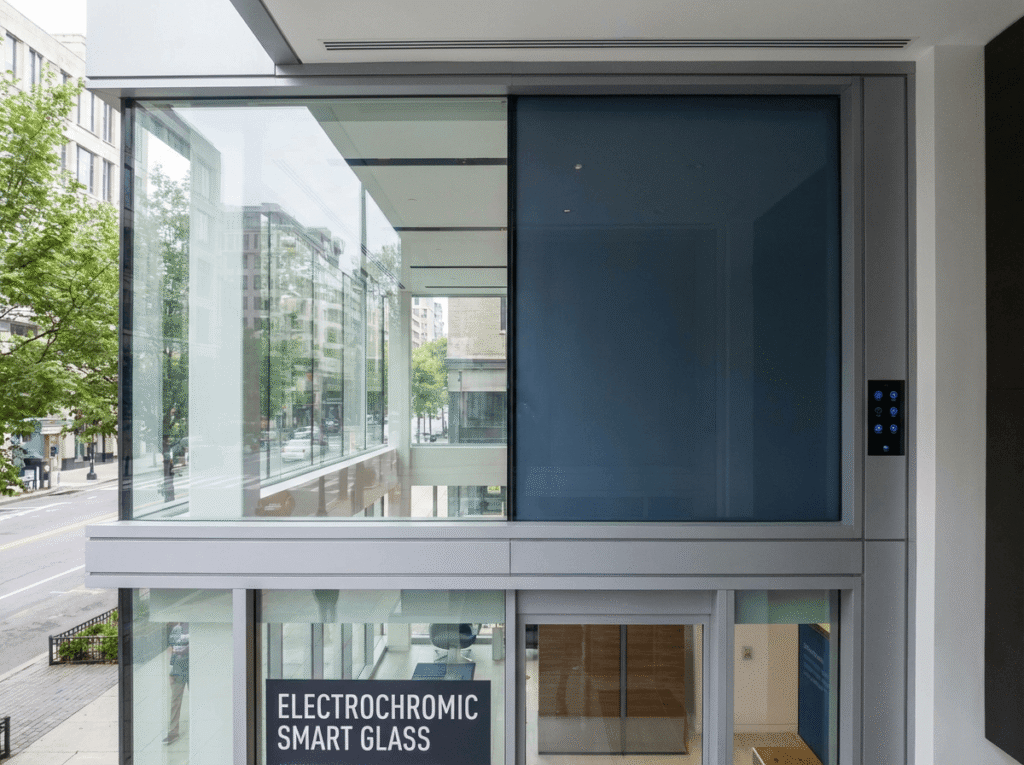
Electrochromic smart tinting glass — switches between transparent and tinted
Building-Integrated Photovoltaics (BIPV) is another fast-growing category. Thin-film photovoltaic modules integrated with glass curtain walls allow facades to generate electricity while still letting light through. Driven by green building certification pressure, BIPV is increasingly appearing in new commercial and public building designs.

Building-Integrated Photovoltaics — glass that generates electricity
Common Questions
Q: Is tempered or laminated glass safer?
They address different risks. Tempered glass reduces laceration risk when it breaks. Laminated glass prevents fallen shards — the fall hazard itself. In high-rise buildings and anywhere with fall risk, laminated glass is mandated by code. Both are far superior to plain annealed glass. They are not directly comparable — they answer different questions.
Q: How long do IGUs last?
Design life for quality manufactured units is 20 to 25 years. Actual lifespan depends heavily on edge seal quality. Protect the sealant during installation. Inspect it periodically. Replace aging sealant promptly. These steps significantly extend service life.
Q: Which countries import the most Chinese architectural glass?
Based on customs data: the United States, Vietnam, South Korea, India, and Australia are among the top destinations. China is already the world’s largest producer and exporter.
Summary
Architectural glass selection comes down to ranking your priorities.
First: is this location driven by safety, insulation, or soundproofing? Then: does local code impose any mandatory requirements for this application? Finally: select the glass type and configuration that meets those needs.
Understanding the physics behind each type — annealing as the base, tempering for strength, lamination for fall protection, Low-E for thermal control — is far more useful than memorizing definitions. In real projects, the goal is not to cut costs indiscriminately, not to skip necessary specs, and not to let suppliers make decisions for you.
A qualified selection is one where the glass actually fits the job.