Quick Answer:
If your project demands deep resistance to harsh chemicals, sudden temperature changes, and standardized industrial performance, Borosilicate 3.3 is usually your best baseline.
On the other hand, if you are looking for fire-rated glass for commercial buildings, you will likely be evaluating “Borosilicate 4.0” products. However, 4.0 products must be judged by their certified fire performance, impact safety, and approved framing systems—not just by the glass type alone.
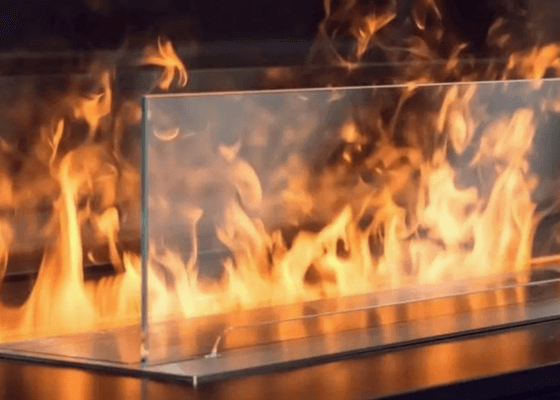
Why Getting the Exact Grade Matters
Navigating glass specifications can be overwhelming, and we completely understand the challenge. If your team or design engineers happen to choose the wrong borosilicate grade, the problem goes far beyond the budget. It can impact how well the glass survives chemicals and heat. It can affect your fire-code compliance. It might even determine whether a building inspector approves your window systems at all.
When a blueprint or project request simply asks for “borosilicate glass,” that is rarely precise enough for the real world. Borosilicate 3.3 and products sold as borosilicate 4.0 are actually designed to survive very different environments.
One is heavily relied upon by engineers as a standardized, chemically durable glass that barely expands under heat. The other is more often used by architects and contractors for fire-resistant building glass. For fire-rated glass, the exact product datasheet, the fire test, and the approved framing system matter much more than the nickname of the glass.
Let’s break down the fundamental differences between the two together. This way, you can confidently source the exact, compliant match for your blueprints.
Borosilicate 3.3: The Standardized Technical Glass Grade
Borosilicate 3.3 is the formal, standardized grade that most engineers are looking for when they request high-performance borosilicate glass.
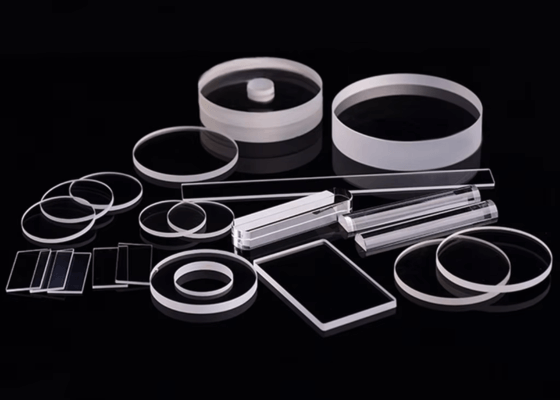
The Formal Standards Backbone
ISO 3585 is the main reference standard for borosilicate glass 3.3. Additionally, ASTM E438 classifies this low-expansion borosilicate glass for laboratory apparatus as Type I, Class A.
Why it matters: In other words, 3.3 is not just a marketing label. It is a specific grade backed by the clearest, most globally recognized testing standards in the industry. You always know exactly what you are getting.
The Physics of Low Thermal Expansion
This grade is highly valued because its thermal expansion is incredibly low. In everyday terms, “thermal shock” happens when a material expands unevenly while being rapidly heated or cooled. This internal stress is what causes standard glass to shatter.
For example, SCHOTT lists their BOROFLOAT® 33 with a coefficient of linear thermal expansion of 3.25 × 10⁻⁶ K⁻¹ (between 20 and 300°C). It has an annealing point of 560°C and a softening point around 820°C.
Why it matters: Those numbers simply mean that 3.3 is the go-to choice when dimensional stability under extreme heat is critical. Lower expansion means the glass experiences far less stress during temperature changes. That is exactly what equipment designers need for labware, sight glasses, and hot processing vessels.

Chemical Service and Standardized Durability
Chemical durability is another huge reason 3.3 keeps showing up in rigorous industrial projects. SCHOTT’s DURAN® borosilicate glass 3.3 datasheet lists specific ratings: hydrolytic resistance HGB 1 (how well it resists water), acid resistance S 1, and alkali resistance A 2.
Why it matters: It offers proven, reliable resistance to water, neutral and acid solutions, and many organic substances. However, manufacturer literature clearly warns that extreme substances—like hydrofluoric acid, hot phosphoric acid, and concentrated alkaline solutions—can still attack the surface over time. The safest way to look at 3.3 is that it is highly resistant, but not magically “immune to everything.”
“Borosilicate 4.0”: Navigating Fire-Rated Architectural Glazing
This is where we always advise project managers to slow down and read the datasheets carefully. Unlike 3.3, “4.0” is not a universally recognized, standalone material standard.
A Market Label, Not a Standalone Standard
Official standards are much clearer around borosilicate 3.3 than they are around a generic “borosilicate 4.0” grade. In SCHOTT’s technical classifications, they describe a subgroup of borosilicate glasses containing alkaline-earth. These have a slightly higher thermal expansion in the 4.0–5.0 × 10⁻⁶/K range, and they are considered slightly softer than 3.3 glasses.
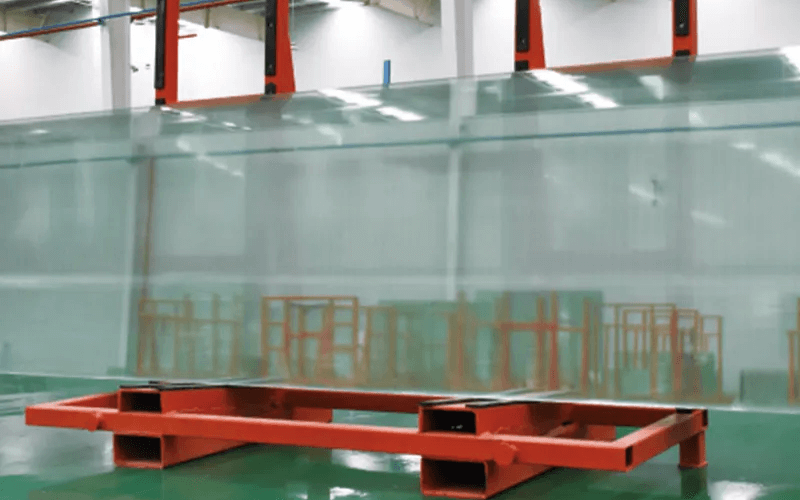
Why it matters: This helps explain why “4.0” appears in the commercial market. However, seeing “4.0” on a label does not replace the need to verify the exact product and approval documents before you place an order.
The Critical Role of Tested Assemblies
In practice, many products discussed under the “4.0” label are tied to fire-resistant building glass. For example, SCHOTT’s PYRAN® S technical data describes a monolithic (single-pane) borosilicate fire-resistant glass. It offers fire resistance classes from E 30 to 120 and EW 30 to 60, with a light transmission of around 91–92%. Crucially, it includes an explicit note that maximum glass dimensions depend entirely on the approved framing system, which can be found in the testing certificates.
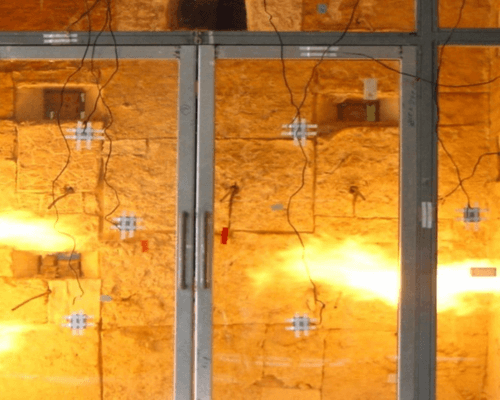
Why it matters: That last point is absolutely critical to your success. For fire-rated building glass, the safety performance belongs to the entire tested assembly (the glass plus the frame together). The chemistry of the glass pane alone is not enough to pass an inspection.
Meeting Specific Building Codes
In North American product literature, SCHOTT’s PYRAN® Platinum variants make this principle even clearer. The monolithic version is intended for certain non-impact, non-safety-rated locations with fire ratings up to 90 minutes. Laminated and filmed variants extend those use cases. The product pages describe protection up to 90 minutes in windows and up to 180 minutes in doors for specific variants.
Why it matters: Again, the right question to ask your supplier isn’t “Is 4.0 better?” The better question is: “Which exact product, thickness, variant, and tested framing system will meet my local building code?” We are always here to help you answer that.
The Real Difference: Identifying Your Primary Risk
The easiest, most stress-free way to decide between 3.3 and 4.0 is to look at the main risk you are trying to prevent.
Mitigating Chemical and Thermal Risks
If your main worry is chemical attack, repeated heating and cooling, or dimensional shifting in a processing environment, 3.3 is usually the safest starting point. It provides the strict standards, the low thermal expansion, and the chemical durability that industrial engineers expect. That is why it is the standard for laboratory apparatus, industrial sight glasses, tubing, piping, and process components.
Preventing Fire Spread in Buildings
If your main worry is stopping fire from spreading through a building, the conversation changes entirely. In this case, your contractor or architect needs a fire-resistant glass with the correct classification. It needs impact performance where required, an approved framing system, and documented size limits. This is where fire-rated borosilicate or glass-ceramic products are evaluated. The decision is no longer just about the glass’s expansion coefficient. It is about legal building codes, tested assemblies, and keeping people safe.
The Flat Glass Myth-Bust
Can borosilicate 3.3 be used as flat glass?
Yes, absolutely! People sometimes assume 3.3 only exists as round tubing or lab beakers. However, BOROFLOAT® 33 is a floated borosilicate flat glass, and SCHOTT proudly describes it as the world’s first floated borosilicate flat glass. So, 3.3 definitely exists in flat-sheet form.
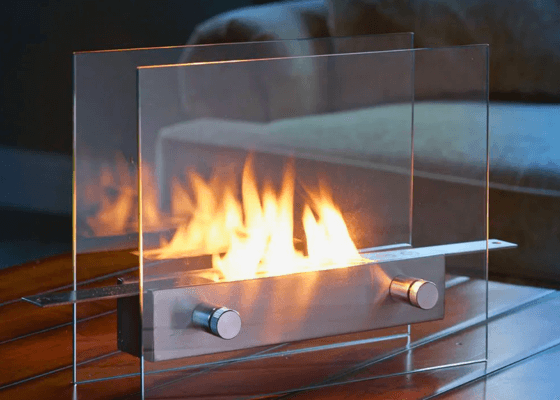
The more practical question for you is whether it is the right material for the panel size, safety requirements, and certification path of your project. Being flat does not automatically make it a safe substitute for a fire-rated architectural window.
Head-to-Head Comparison: Where Each Grade Usually Wins
| Feature | Borosilicate 3.3 | “Borosilicate 4.0” (Fire-Rated) |
| Main Use Case | Process lines, labware, sight glasses. | Fire doors, partitions, vision panels. |
| Thermal Expansion | 3.25 × 10⁻⁶ K⁻¹ (Ultra-low strain). | 4.0–5.0 × 10⁻⁶/K range (Slightly softer). |
| Chemical Resistance | Standardized HGB 1, S 1, A 2 ratings. | Secondary to fire and impact performance. |
| Industry Standards | ISO 3585, ASTM E438 Type I, Class A. | E, EW, EI classes, UL Classifications. |
| Key Project Question | Does it maintain dimensional stability under heat? | Does the tested assembly meet my building code? |
| Risk of Wrong Choice | Shatters under harsh chemical or thermal shock. | Fails building code fire inspection. |
1. Industrial Standards Language
If your project files mention ISO 3585 or ASTM E438 Type I, Class A, you are safely in 3.3 territory. That language points to standardized, low-expansion borosilicate glass designed for demanding technical use. If your project file mentions E, EW, EI classes, UL classifications, hose-stream testing, or approved fire-door assemblies, you are on a fire-glazing compliance path. In that world, product certifications drive the decision.
2. Chemical Service Frameworks
For acids, water resistance, and general processing durability, 3.3 has a beautifully clear track record and standards framework. That is one of its biggest advantages for your team. You aren’t guessing. You are working from well-established technical facts.
3. Fire-Rated Architectural Use
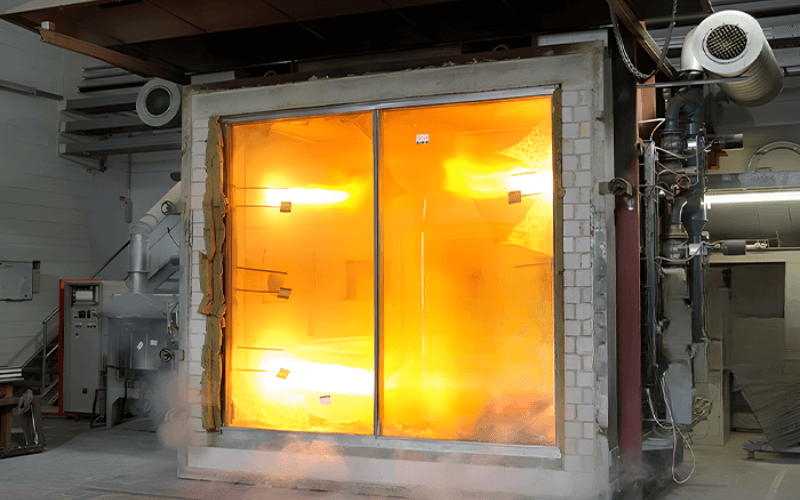
For fire-rated windows, doors, and partitions, the best question isn’t whether one expansion number is lower than another. The best question is whether the exact product has the fire rating, impact classification, size allowance, and system approval your code requires. Official fire-glazing literature repeatedly ties performance directly to the approved framing system.
4. Size and Processing Limits
Sourcing large glass is never just about chemistry. It is also about manufacturing, handling, and installation limits. SCHOTT’s fire-glazing documents explicitly note that maximum dimensions depend on the approved system. Furthermore, their North American PYRAN® Platinum materials publish specific sheet sizes for specific variants. That is why we always recommend requesting the current datasheet and approval package before assuming any “4.0” product is interchangeable with another.
When Should You Choose Borosilicate 3.3?
Make 3.3 your go-to material when you need the comfort and backing of strict technical standards. It is perfect when your environment is defined by extreme heat, harsh chemicals, or process reliability.
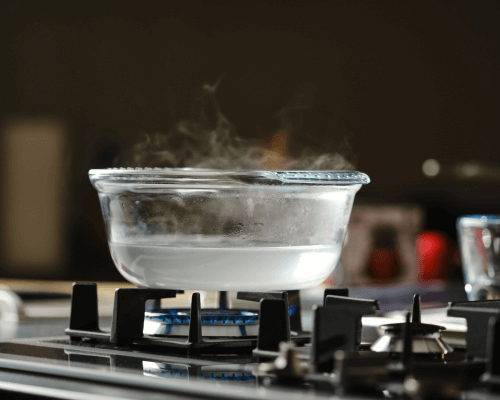
Typical examples include laboratory equipment, industrial sight glasses, glass piping, process vessels, and components where surviving thermal shock is a core requirement. If your engineering checklist starts with “chemical exposure,” “thermal cycling,” or “ISO/ASTM technical glass,” let’s look at 3.3 first.
When Do You Need 4.0-Type Fire-Resistant Products?
Choose these products when your project is truly about fire-resistant performance inside a building system.
That usually means fire doors, glass partitions, vision panels, and windows. For these code-driven applications, your supplier must provide the exact classification, thickness, impact rating, and documentation for the tested assembly. In this category, your team should never rely on the “4.0” name alone. Always ask for the actual product name, test standard, approved size range, and system certificate.
Common Mistakes to Avoid
We see these mix-ups happen often, so don’t worry if it seems confusing at first! Here is what to watch out for:
The Universal Answer Myth
The most common mistake is treating the word “borosilicate” as if it were one universal material that does everything. It is a family of glasses, not a single answer.
The Chemical Process Line Error
A low-expansion technical glass like 3.3 may be absolutely perfect for a chemical processing line, but it can still be the completely wrong material for a code-driven fire-door.
The Architectural Glazing Error
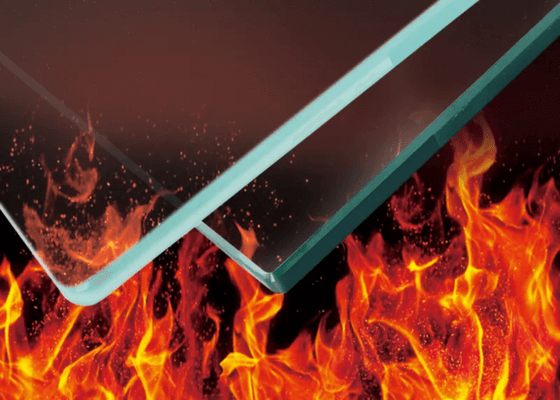
On the flip side, a fire-rated architectural product may be excellent in a certified commercial door, but it is not the right substitute for a standardized chemical-service glass.
The Real Purchasing Logic
The material families overlap, but the logic behind choosing them does not. Always buy for your specific environment.
Your Project Checklist Before Ordering
Before your team issues a Purchase Order for either material, let’s make sure you have verified the following details with your glass supplier:
- Exact product name (Avoid generic labels).
- Relevant standard or certification (ISO/ASTM vs. UL/EI classes).
- Service environment (Chemical/thermal vs. fire-containment).
- Thickness and size range limits.
- Fire rating and approved framing system (If applicable).
- Chemical and fabrication limits.
- Supporting datasheet or test report.
Frequently Asked Questions
Is borosilicate 3.3 always the better glass?
Not necessarily! It is usually the better fit when chemical durability, thermal shock resistance, and technical predictability are your priorities. However, it is not automatically the better fit for fire-rated architectural glass, where certified building systems are the deciding factor.
Is “borosilicate 4.0” a full replacement for a fire test report?
No, it isn’t. We highly recommend treating “4.0” as a market label. It does not replace your need for the actual product datasheet, fire classification, impact rating, and approved-system documentation. Fire-rated performance is always tied to the tested assembly.

Is 3.3 chemically indestructible?
While it is incredibly strong, it isn’t indestructible. It is highly chemically durable, but not universally resistant to every chemical at every temperature. Manufacturer literature specifically notes limits, including attack by hydrofluoric acid and, depending on conditions, hot phosphoric acid and alkaline solutions.
Does fire-rated borosilicate automatically mean one product fits every project?
No. Fire class, glass thickness, impact requirements, permitted dimensions, and framing compatibility all vary by product and approval. The approved system paperwork truly matters.
Conclusion
At the end of the day, Borosilicate 3.3 and products sold as borosilicate 4.0 are not really competing against each other. They are simply answering entirely different engineering and construction problems.
Borosilicate 3.3 is the clear choice when your project demands standardized low expansion, chemical durability, and industrial reliability. “4.0” products belong in a different conversation entirely: one centered on stopping fire, certified glazing systems, and keeping buildings up to code.
The safest way to choose is simple: Start by identifying your environment’s biggest risk, then verify the exact datasheets and testing paths before you order. You don’t have to figure it out alone.
Need a dedicated guide to help you choose the right borosilicate glass for your project? We are here to make this process easy for you. Send Hexad your blueprints, service conditions, or fire-rating targets, and our technical team will personally help you find the exact, compliant match.